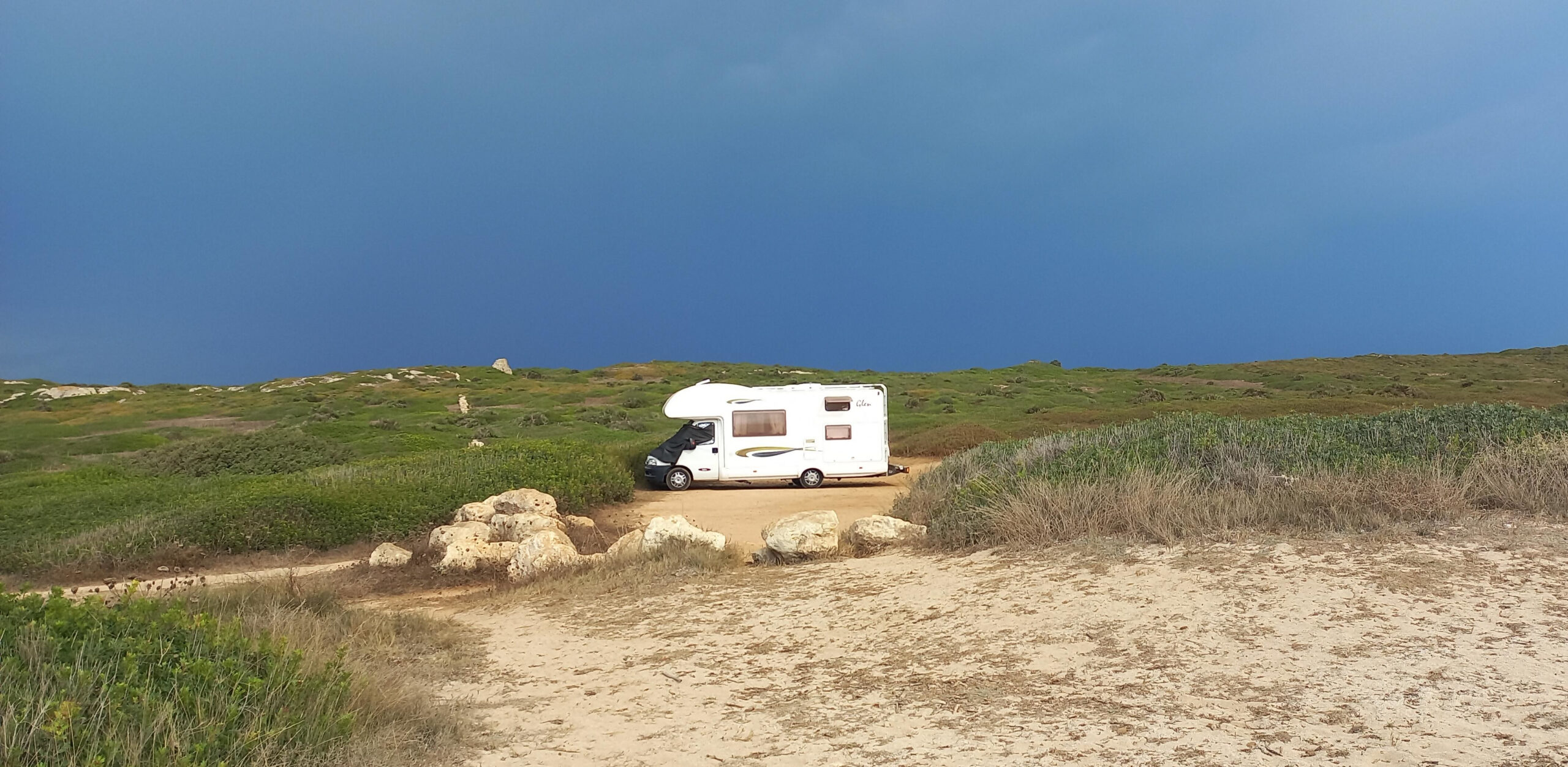
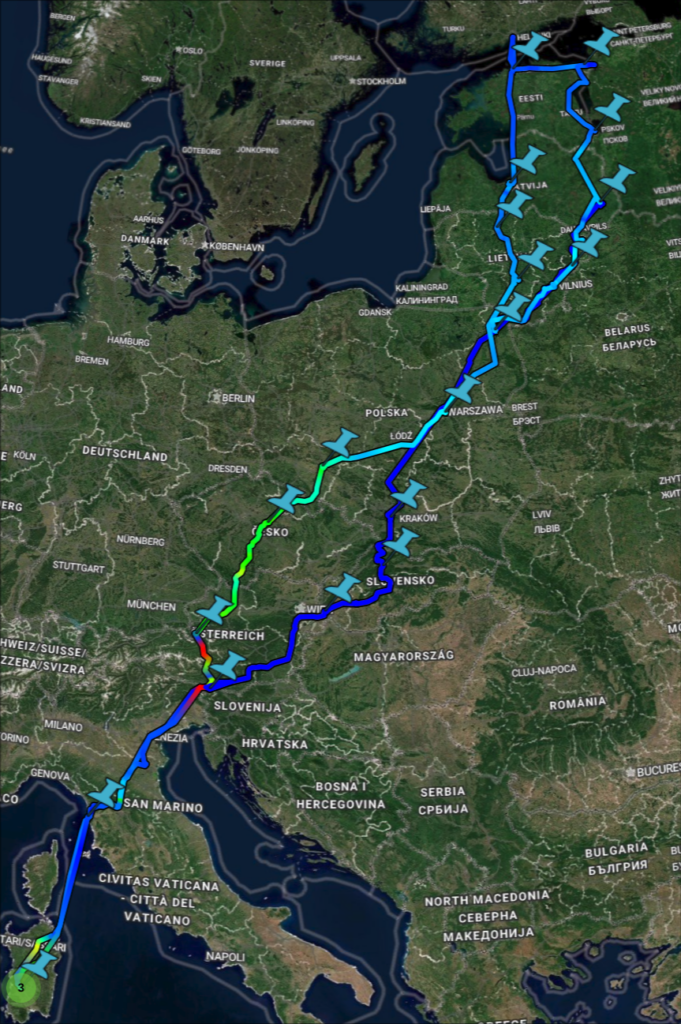
April – May 2026, new mission: Conquering the Baltics! This time, Glen is crossing 8 countries (Italy, Austria, Czech Republic, Poland, Lithuania, Latvia, Estonia, Slovakia) for a total of 7,000 km.
We set off on the afternoon of April 23rd for Olbia, spending the night near the port while waiting for the ferry to Livorno, scheduled for the following morning at 10:30 AM. The day is warm, and we are pumped and ready to go!
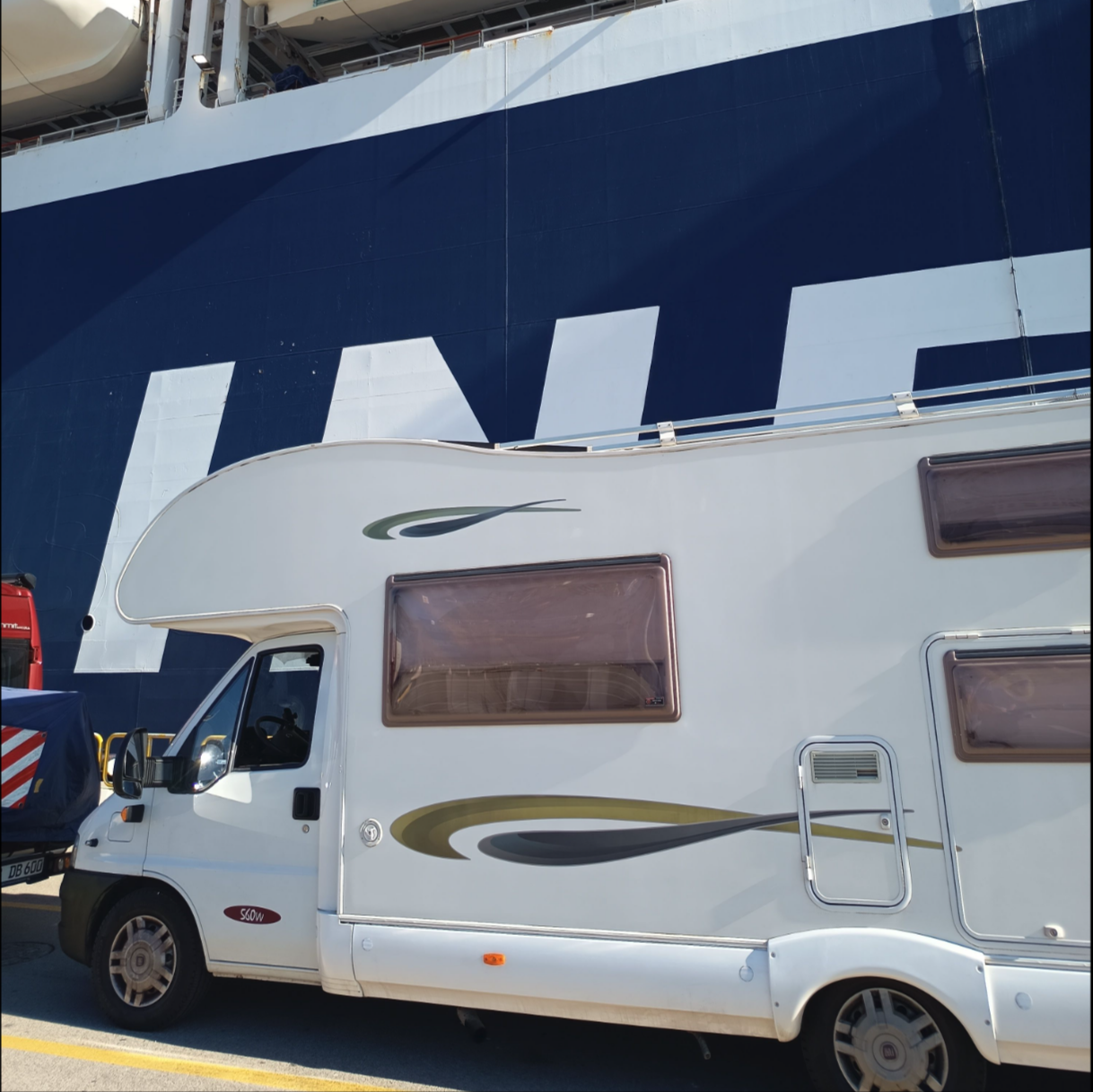
On April 24th, the ferry departs on time; the crossing is long (9 hours) but passes peacefully. Once we arrive in Livorno around 7:30 PM, we try to put a few extra miles behind us in view of the long haul planned for the next day. We spend the night in a free parking area in Galciana, near Prato (43.887933, 11.047427).
Conquering the Baltics: Austria
We set off from Galciana early in the morning, stopping in Bologna for breakfast with some friends before continuing toward the Italian-Austrian border near Tarvisio. The highway allows us to maintain a fairly decent cruising speed, and we reach the border around lunchtime.
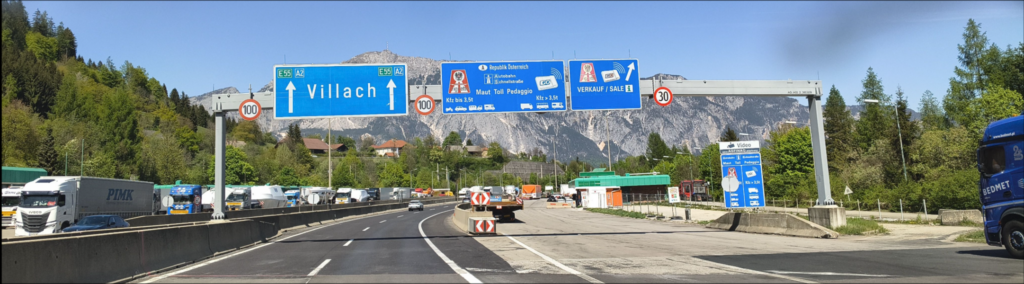
The vignette for the Austrian highways was already paid for in advance (€12.80 for 10 days + €15 for the Tauern Tunnel toll). We cross the Austrian mountains, passing through charming alpine villages, and around 4:00 PM we reach Golling an der Salzach, the first destination of this trip.
The village is stunning, clean and tidy, nestled in the greenery among mountains that are still snow-capped. The sun is shining as we wander among picturesque houses and farm animals, eventually reaching the breathtaking Golling Waterfalls.
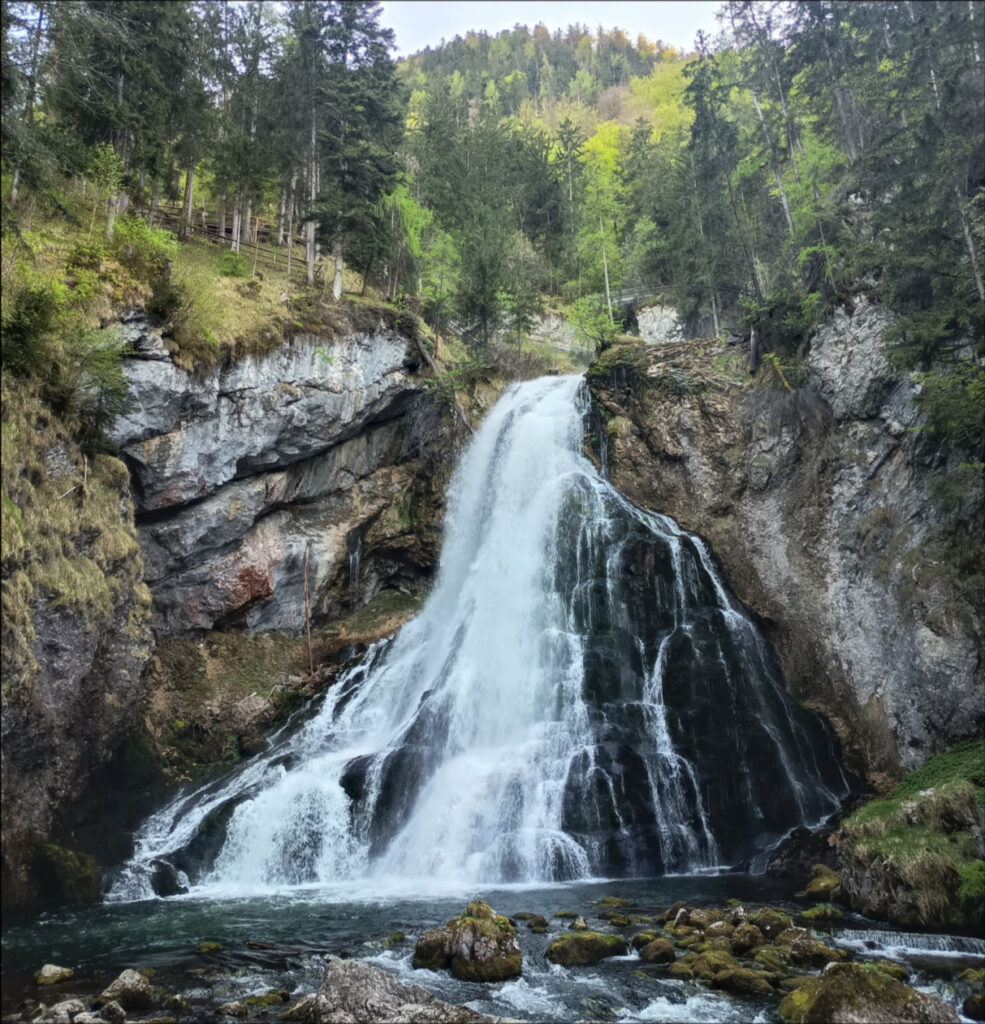
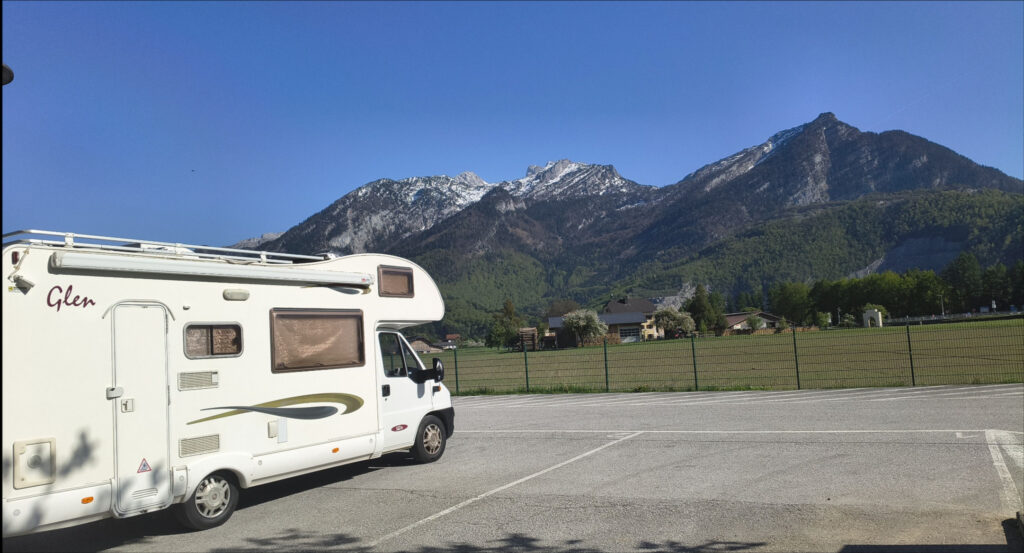
We spend the night at the municipal motorhome parking area (47.594067, 13.171324), paying €15 after a few drinks and a traditional dinner of Schnitzel. Even Nuri is welcomed with a bowl of water in every place we visit.
Conquering the Baltics: Czech Republic
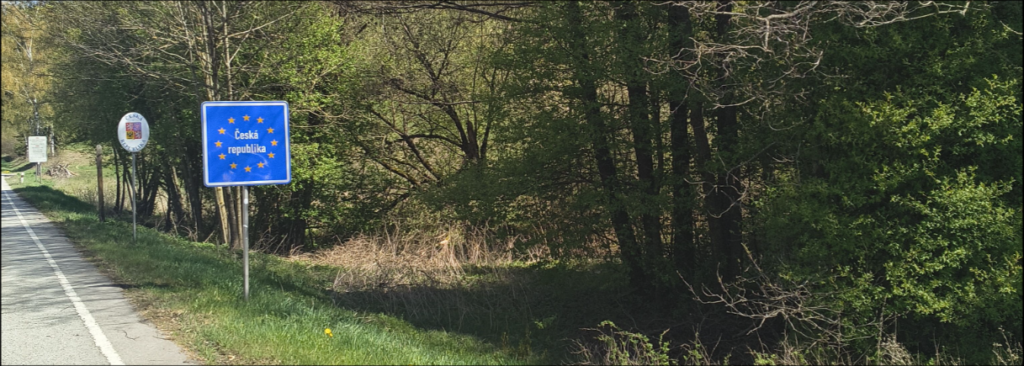
We set off in the direction of the Czech Republic, planning to reach Český Krumlov by morning. The roads after the border aren’t the best, and we lose some time winding through the Czech forests. We drive through the woodlands of South Bohemia, marvelling at the small, traditional socialist-style cabins nestled in nature, known as Chata.
We reach Český Krumlov, but unfortunately, we only manage to have a quick lunch in the camper in a parking lot, as it seems motorhomes are not very welcome there. The historic center looks stunning, but we have to give up on visiting it.
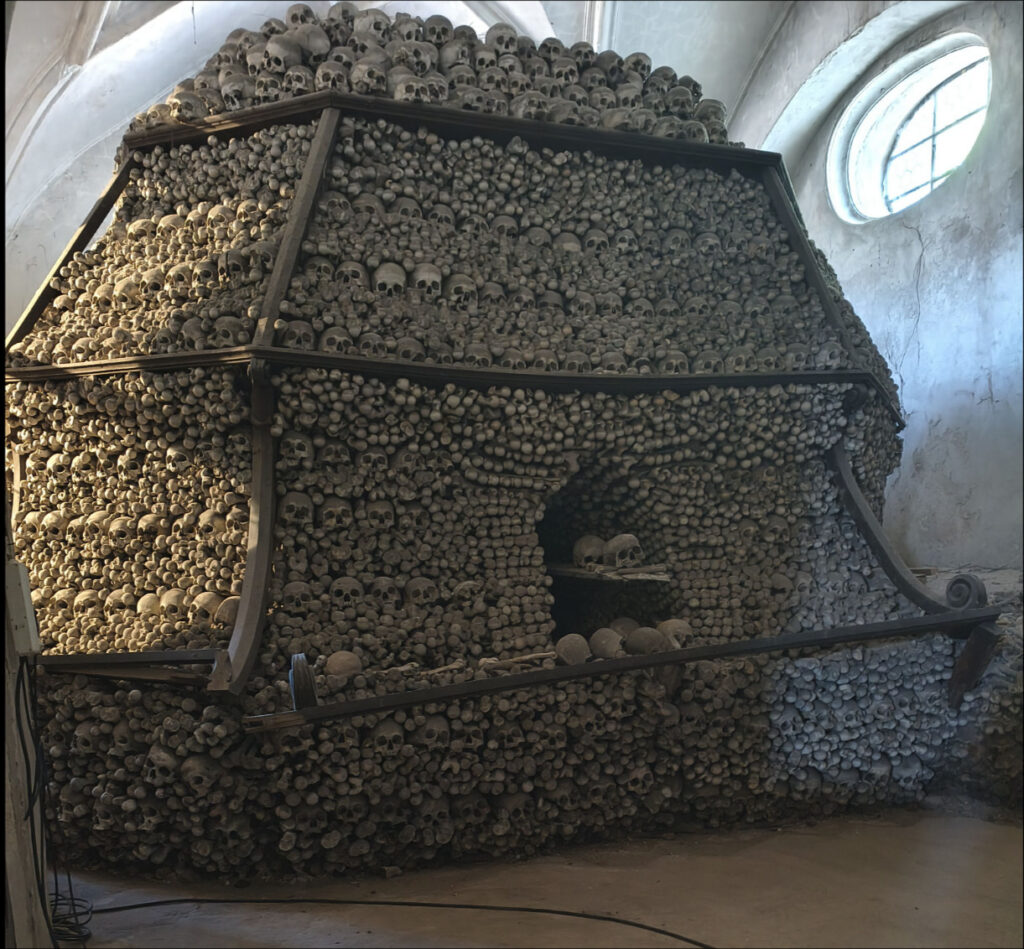
We continue on toward Kutná Hora, a small city east of Prague famous for its ossuary.
We have a long drink with an old friend at a traditional Czech restaurant, Dačický, having an early dinner as per local custom with typical dishes based on venison and pork. Once again, Nuri gets her very own bowl of water!
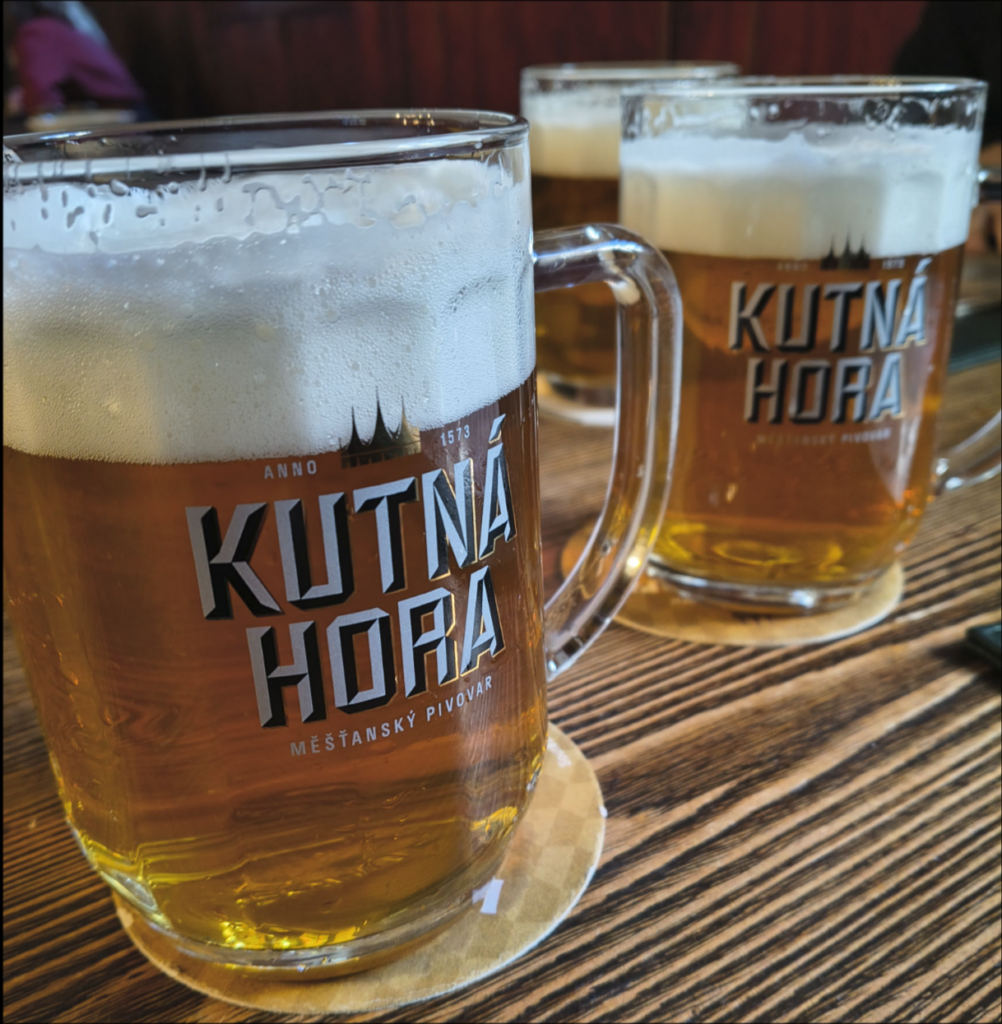
We spend the night at Barbora Kamp (49.955113, 15.260414) after a wonderful evening in the city center.
Conquering the Baltics: Poland
It is April 27th, and we are heading toward Poland: destination Wrocław. From Kutná Hora, the roads aren’t great, at least until we reach the highway, which finally gives us some peace of mind while driving. The distance between the two cities isn’t huge (about 350 km), but the travel time can easily exceed three and a half hours. We stop near Kłodzko to do some grocery shopping and, most importantly, to buy some delicious Pierogi and a few local beers (Żubr).
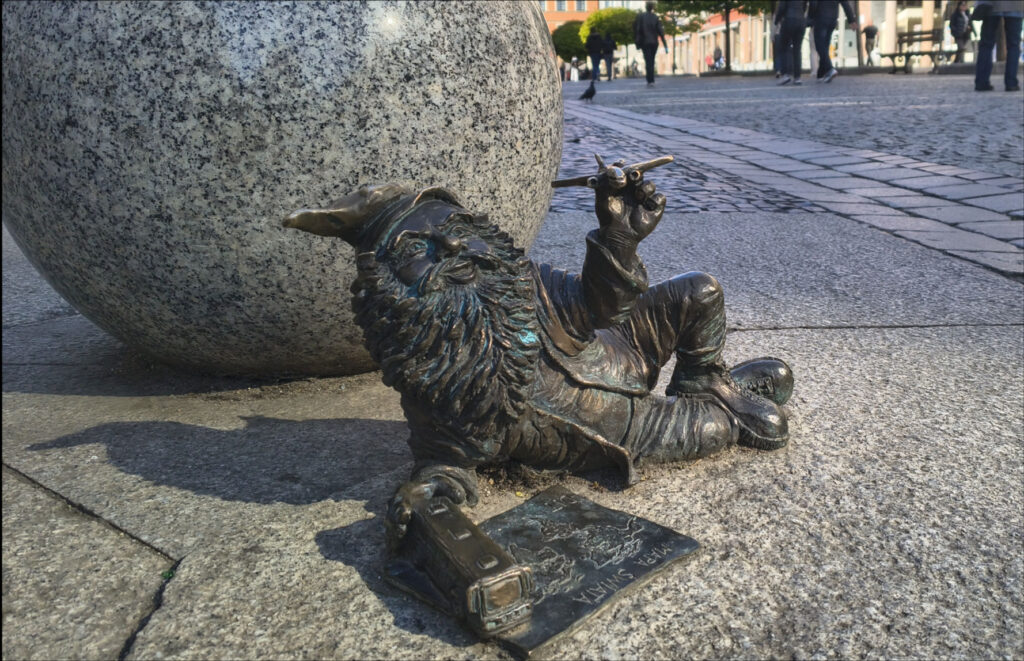
Once we arrive in Wrocław, we park at Wynajem Kampera Wrocław (51.135138, 16.999826) and then take public transport toward the city center. Wrocław is clean and remarkably livable; we wander through the center among elegant buildings, gnome statues, and Baroque churches. We use Atlas Obscura to help us discover unique attractions, including the monument in honor of slaughtered animals.
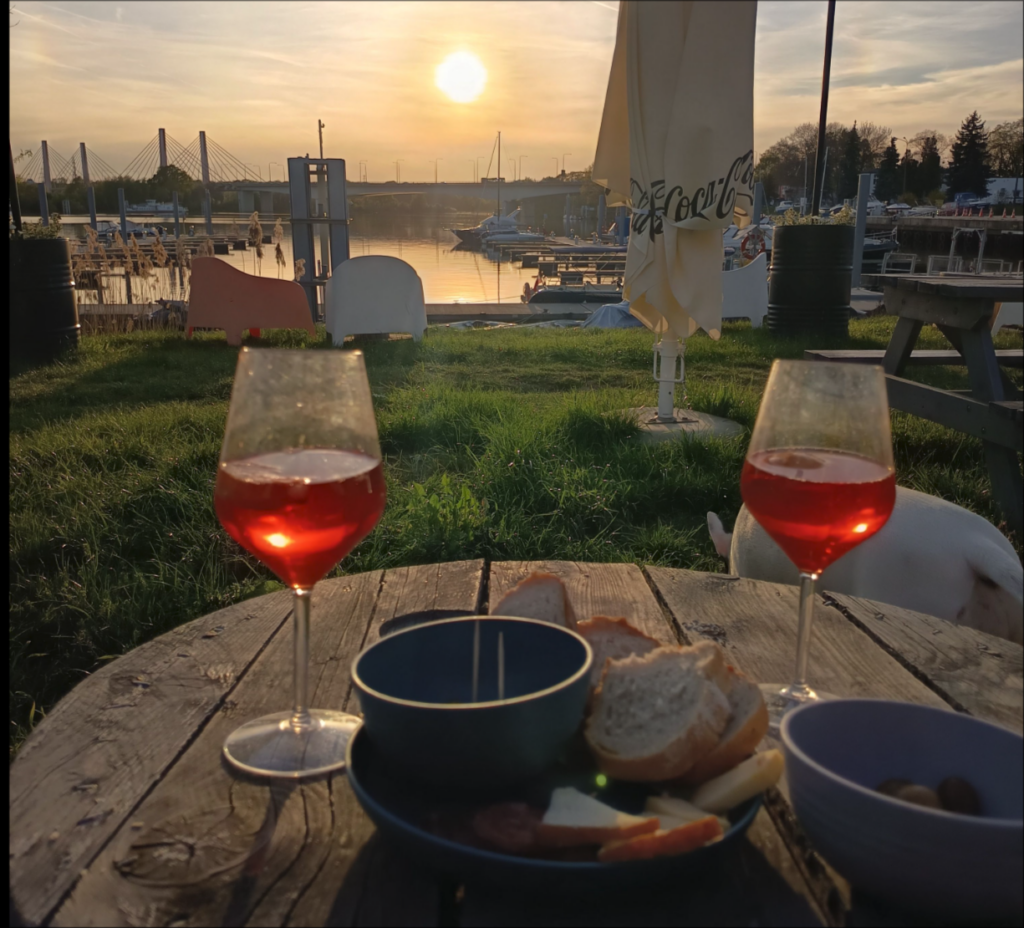
Back at the campsite, we enjoy a drink by the river with a magnificent sunset.
On April 28th, we set off for Warsaw. After a run of beautiful sunny days and mild temperatures, the weather in Central Europe decides to change. The cold sets in and the sky turns gloomy. We reach Warsaw with temperatures not rising above 7°C. We settle in at Camping Sum (52.213687, 21.101312) and, after booking a Bolt taxi, head out to visit the city. The biting cold keeps us from a full tour, so we focus mainly on the socialist-modernist district, which finds its symbol in the Palace of Culture and Science.
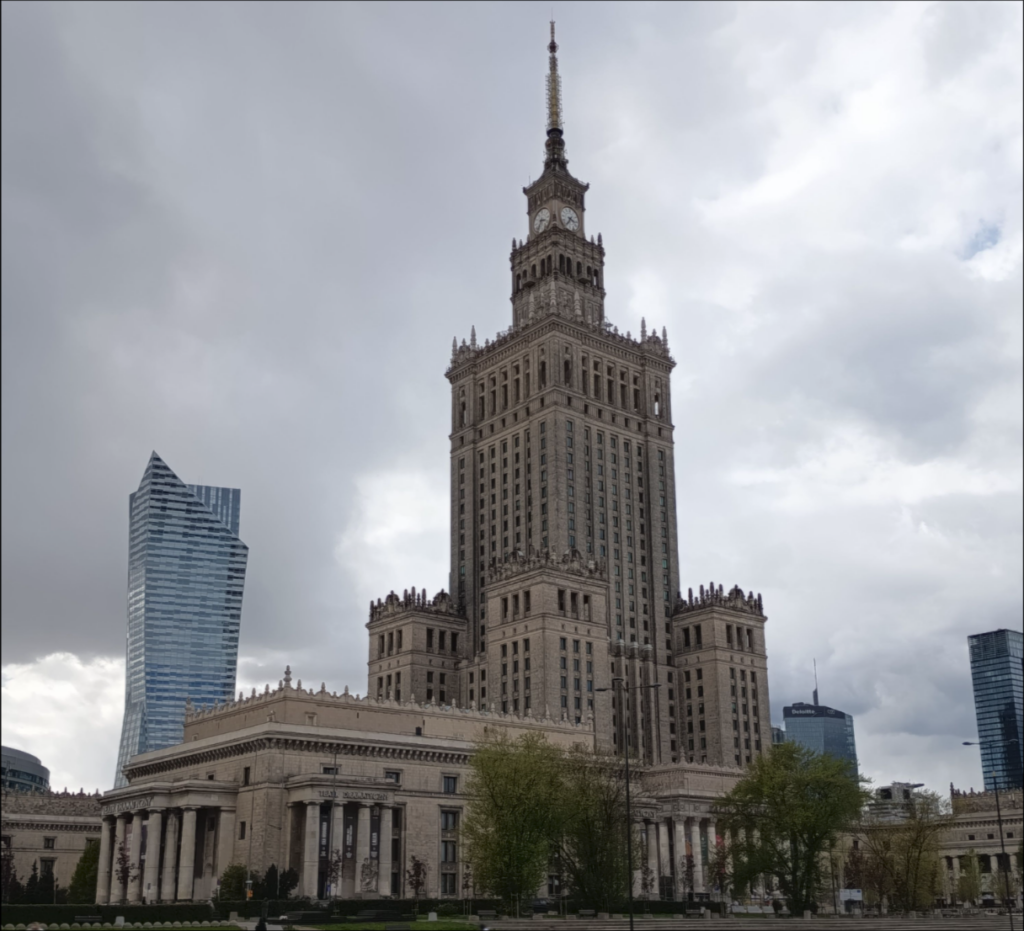
We visit the MDM district (Marszałkowska Dzielnica Mieszkaniowa), a Socialist Realist neighborhood known for its monumental architecture, grand colonnades, and storefronts.
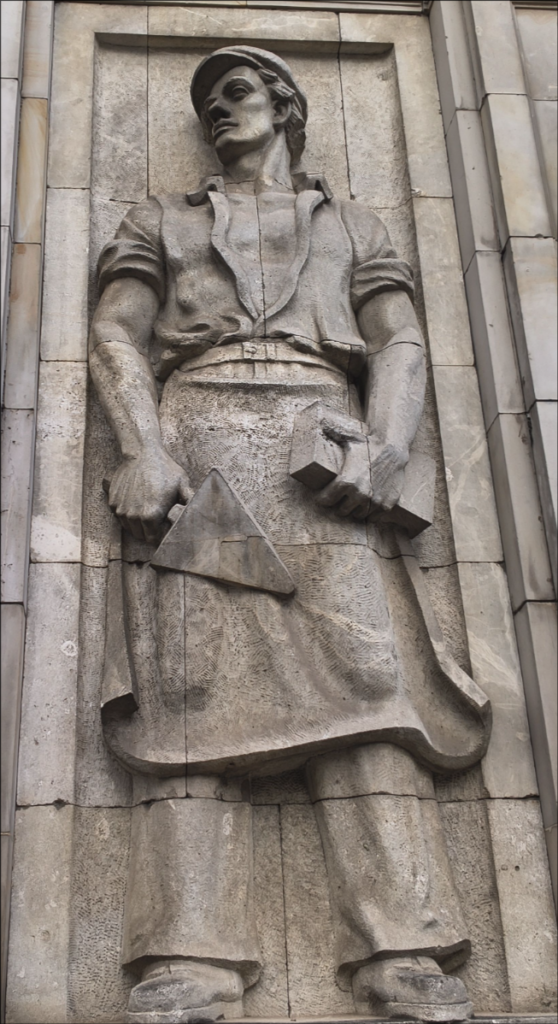
Before returning to the campsite, we stop for a drink at a charming little spot (Świetlica), where—once again—they serve Nuri a nice bowl of water. During the night, the temperature drops below freezing. Keeping the heating on is a must at this point.
Conquering the Baltics: Lithuania
We leave the campsite in what feels like the middle of winter, and after tackling Warsaw’s morning traffic, we head north: Lithuania is waiting for us.
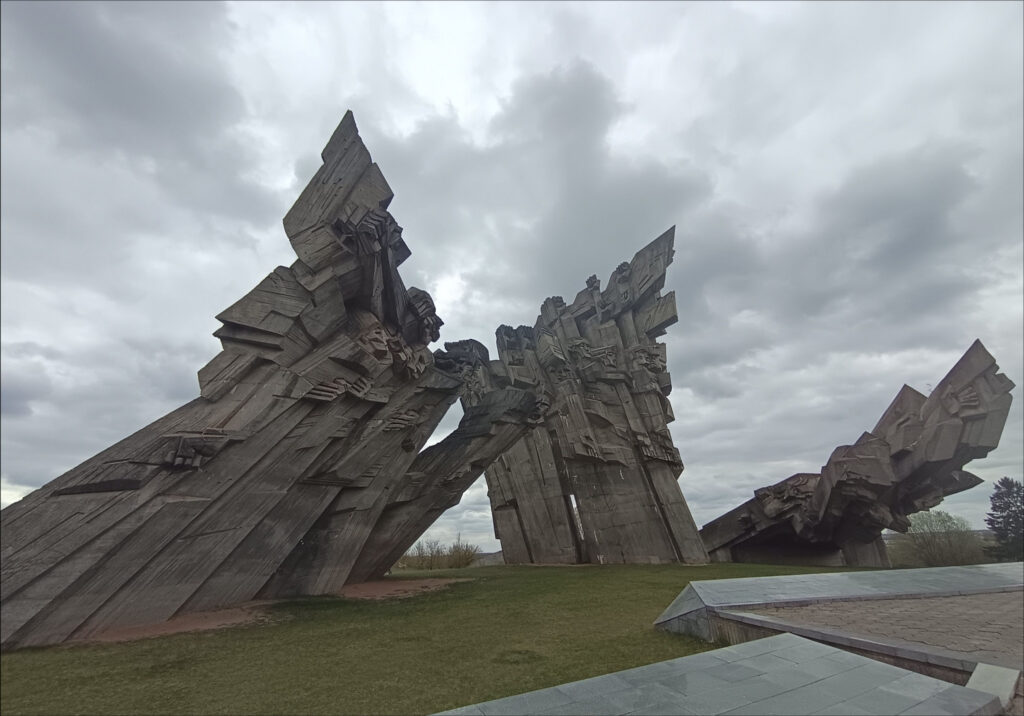
Our first designated stop is the Ninth Fort (Kauno IX forto muziejus). During the Soviet occupation of Kaunas and the rest of Lithuania, it was used as a prison and a transit station for prisoners being deported to labor camps. Following the Nazi German occupation of Lithuania, the site became the scene of numerous executions of Jews, captured Red Army soldiers, and other minorities. Here stands the magnificent monument to the victims of Nazism, completed in 1984 and designed by the sculptor A. Ambraziūnas.
We head toward the city center. To visit Kaunas, we park near the Resurrection Church—Kauno Kristaus prisikėlimo bazilika (54.90311, 23.917468)—and then make our way onto Laisvės alėja. At 2 km long, it is considered one of the longest pedestrian streets in Europe.
Despite the cold, the walk is enjoyable, taking us past churches, street art, and Socialist/Brutalist structures.
For the night, we head near the Pažaislis Monastery (Pažaislio vienuolynas) just outside Kaunas. The parking spot is right on the river, offering a fantastic view and a small beach where Nuri can run around freely.
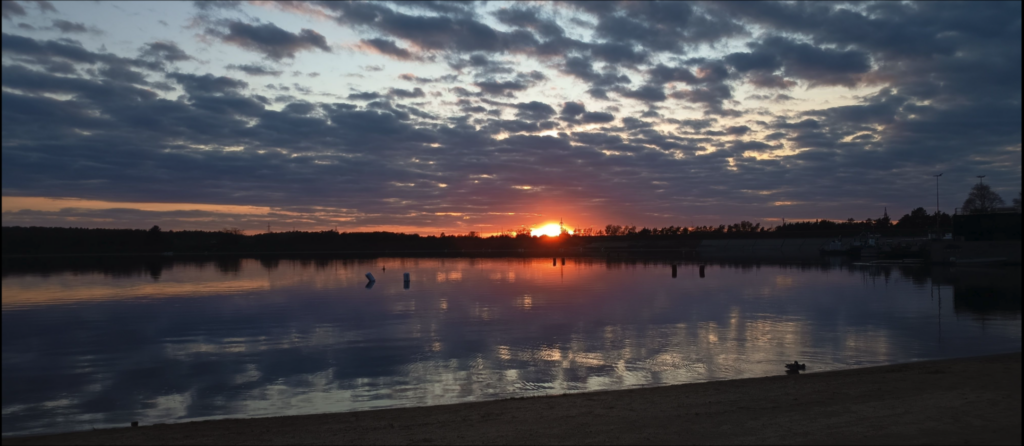
Despite the wonderful and free location, we move to another nearby parking lot due to the constant back-and-forth of cars racing around at full speed, seemingly competing in some kind of race (54.876116, 24.020717).
During the night, Kaunas shows the full power of the Baltics as the temperature drops to -4°C. Early the next morning, we set off for our next destination.
Around 10:00 AM on April 30th, we arrive near Šiauliai to visit the world-famous Hill of Crosses (Kryžių kalnas).
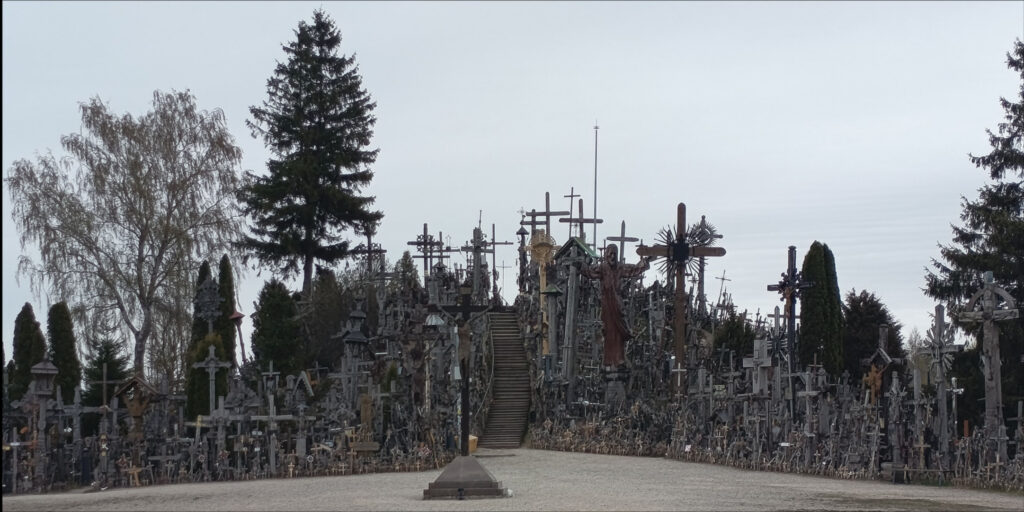
It is a 45-meter-high hill near Jurgaičiai, covered with approximately 100,000 crosses of every size, shape, and material—ranging from small, mass-produced plastic crosses to monumental, artistic ones.
The cold is biting, but the journey must continue: we are heading toward Latvia.
Conquering the Baltics: Latvia
We enter Latvia around 12:30 PM after a smooth journey, despite the roads not allowing for high speeds, a bit of sleet, and an emergency alert from the Lithuanian government—which, fortunately, turned out to be just a drill.
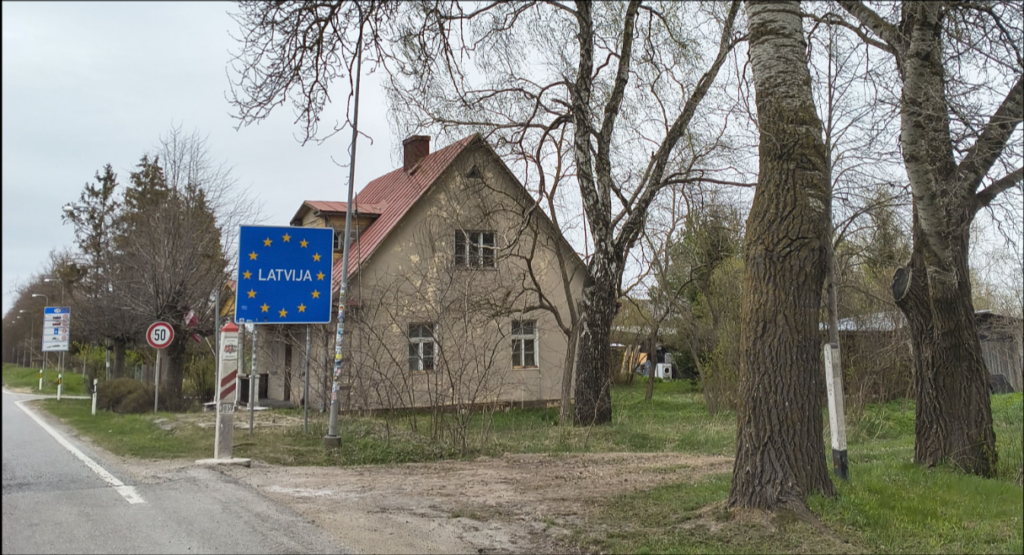
We do some grocery shopping at a mall a few kilometers outside of Riga. It feels like a winter day: for the entire drive, the temperature never rose above 5°C. Riga reveals itself as brutal and majestic, dominated by its panelák.
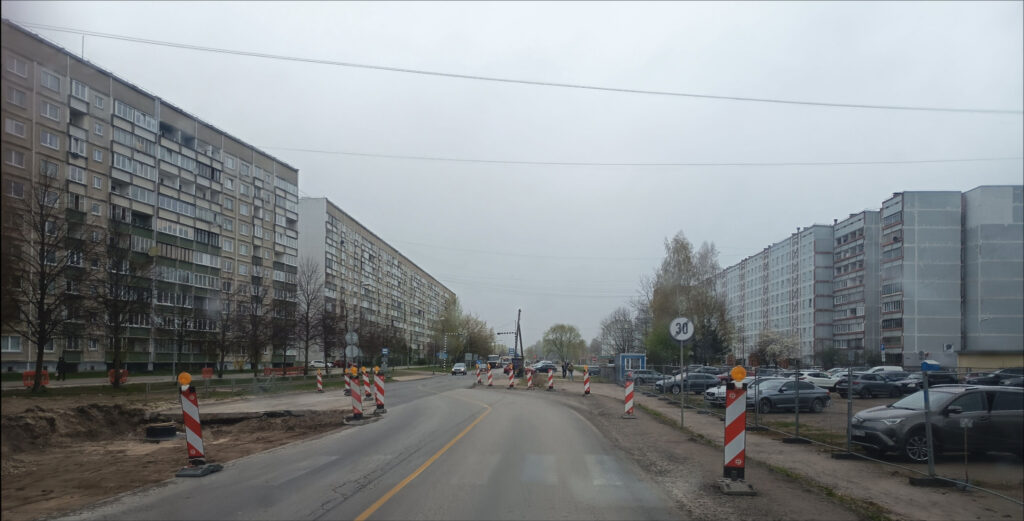
We park at Riverside Camping (56.963002, 24.079338) and take a Bolt again—though this time without Nuri, as it’s raining and freezing cold—to go visit Riga.
The center of Riga is a fascinating architectural mosaic, where the fairy-tale elegance of Art Nouveau buildings meets the medieval heart of the Old Town’s cobblestone streets, all standing in stark contrast to the Socialist Realist architecture that surrounds it.
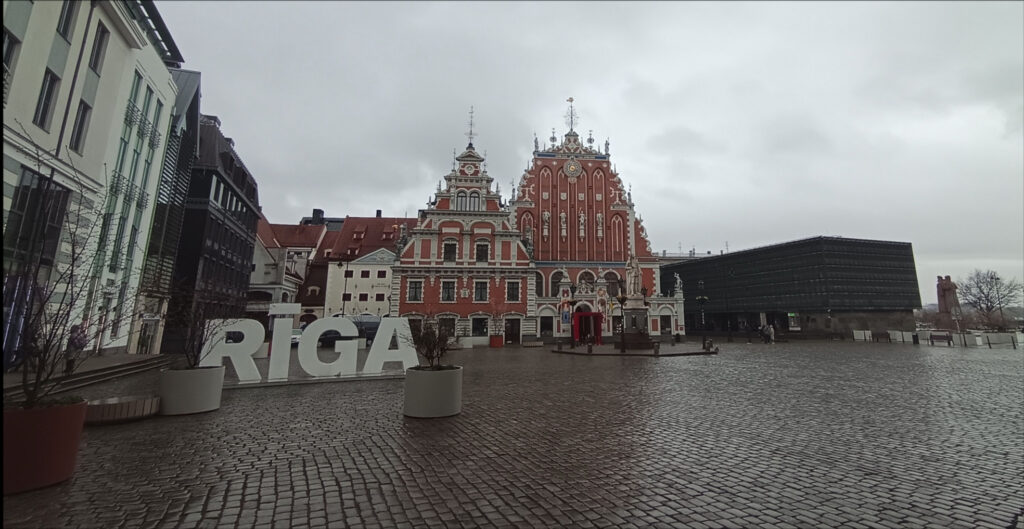
We wander through the center, past stunning buildings and historical traces of the Latvian struggle for independence—such as the footprints of the 1989 human chain and the Freedom Monument. We stop for a beer in a fantastic underground medieval tavern, Rozengrāls.
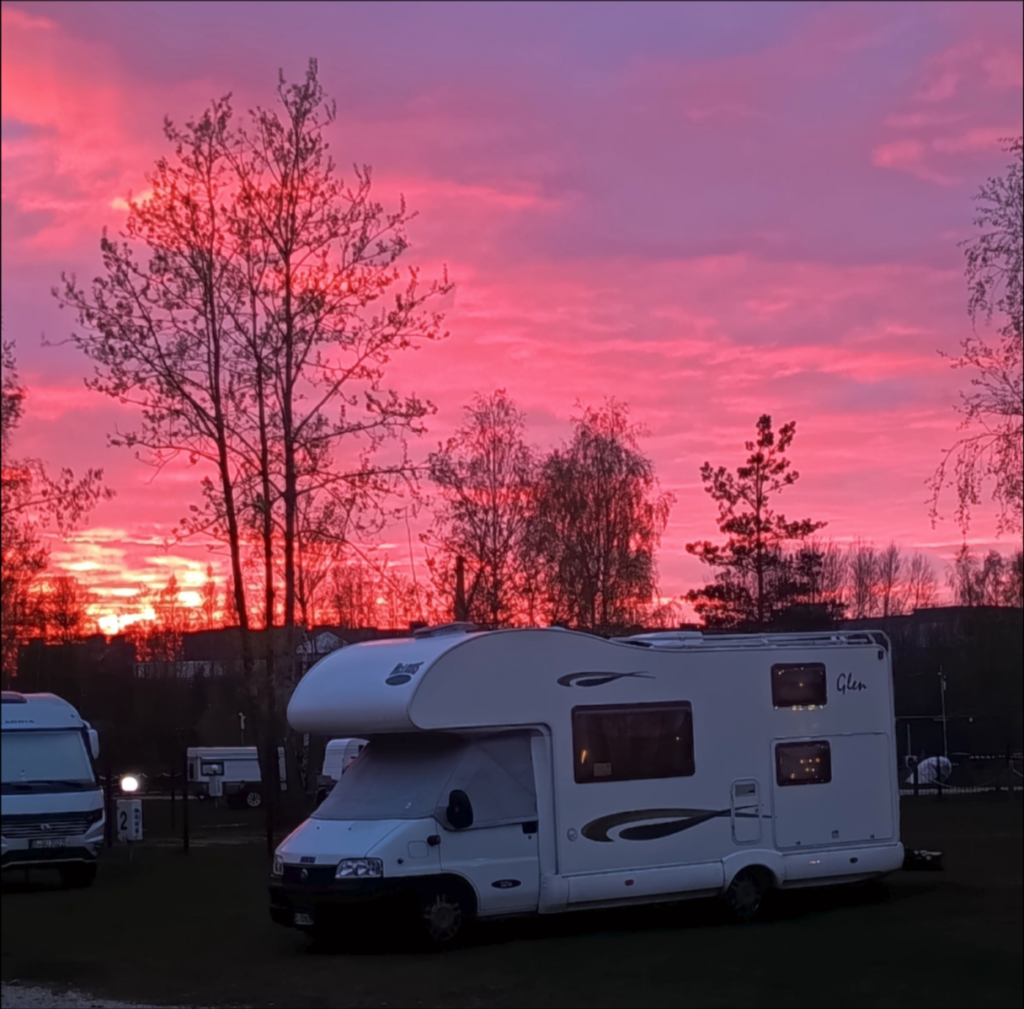
As we return to Glen, and Riga treats us to a spectacular sunset: perhaps the Baltics have decided to gift us some beautiful days for the rest of the trip?
Conquering the Baltics: Estonia and Finland
We set off very early, knowing it will be a truly long day. The distance between Riga and Tallinn is about 300 km, but the estimated travel time is nearly 5 hours. We need to be at the Port of Tallinn by 12:30 PM to catch the ferry that will take us to Helsinki in two hours.
Our morning starts with a small setback: the night before, we used the campsite’s washer-dryer to freshen up our clothes, but unfortunately, the dryer failed, leaving us with a heap of wet laundry. We decide to hang them on a makeshift clothesline inside the camper and race toward Tallinn.
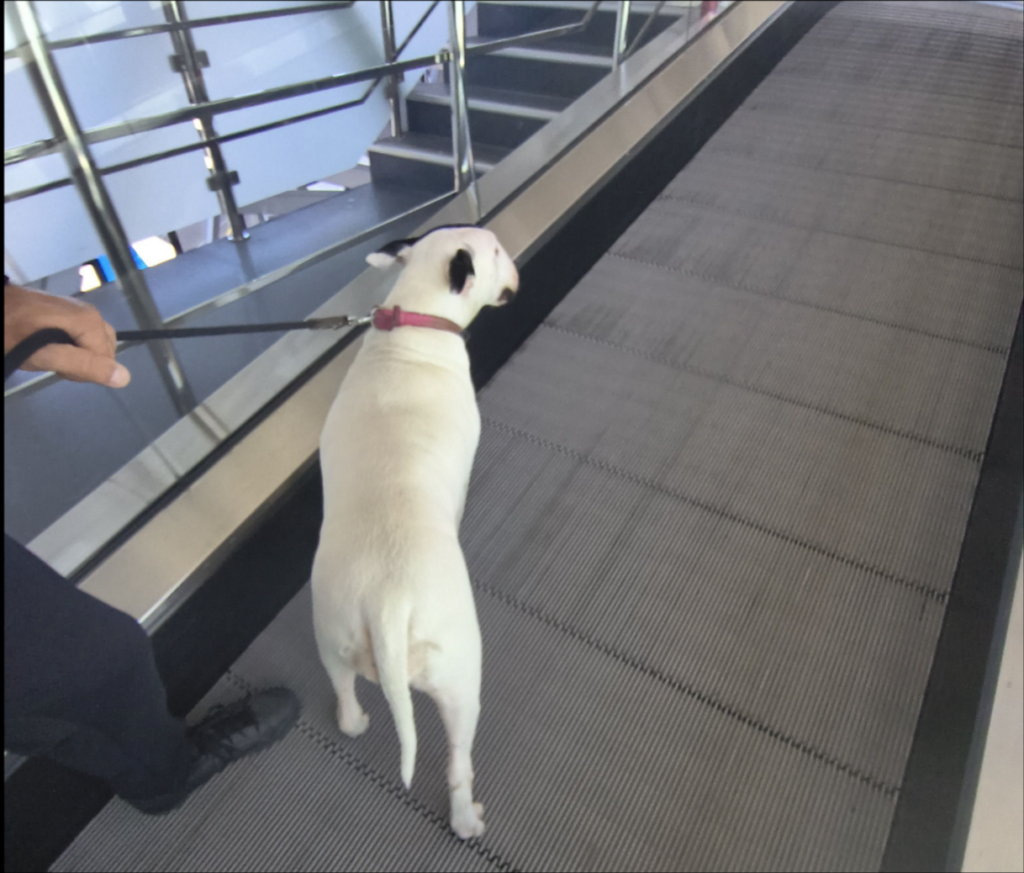
We arrive at the port right on time. Since the clothes are still damp, we pack them into bags for now and proceed with boarding the Tallink ferry to Helsinki. We park in a secure lot at the port (59.443648, 24.759191), where we will also spend the night upon our return. Meanwhile, Nuri experiences an escalator for the very first time.
The crossing to Helsinki is pleasant, though unfortunately, Nuri is forced to travel in the kennels. Once again, no one checked her passport or the required vaccinations—which, for Finland specifically, require treatment for tapeworm in addition to the rabies vaccine.
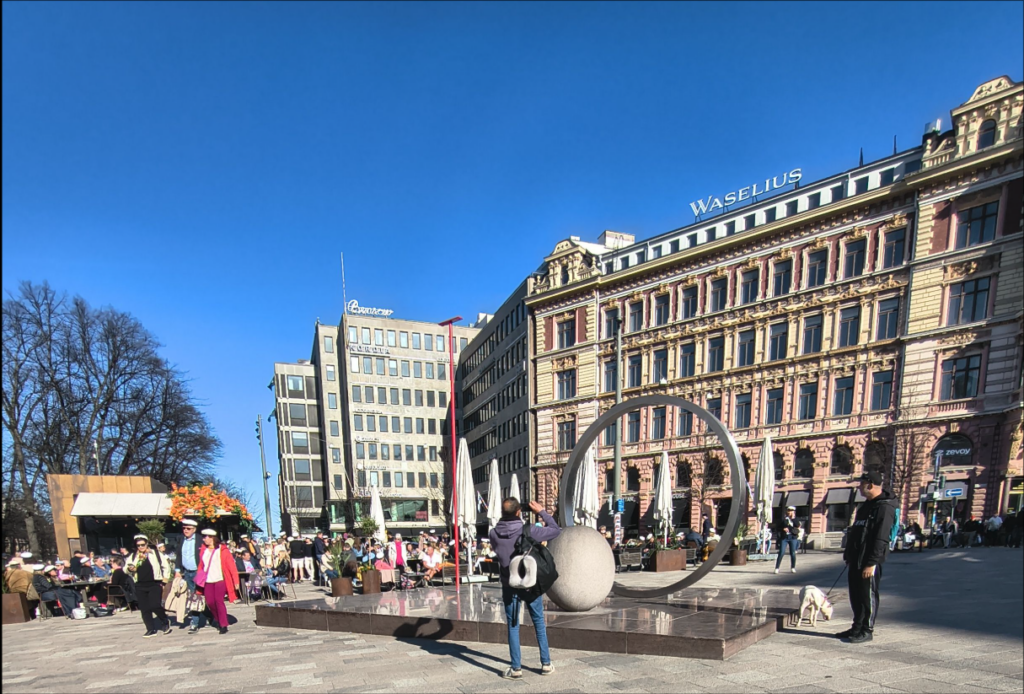
We disembark in Helsinki under a beautiful sun; the city appears modern and orderly. It is absolutely teeming with celebratory crowds, and we notice that many of them are wearing white caps. We soon discover that May 1st in Finland—and specifically in Helsinki—is not only Labor Day but also the Spring Festival (Vappu).
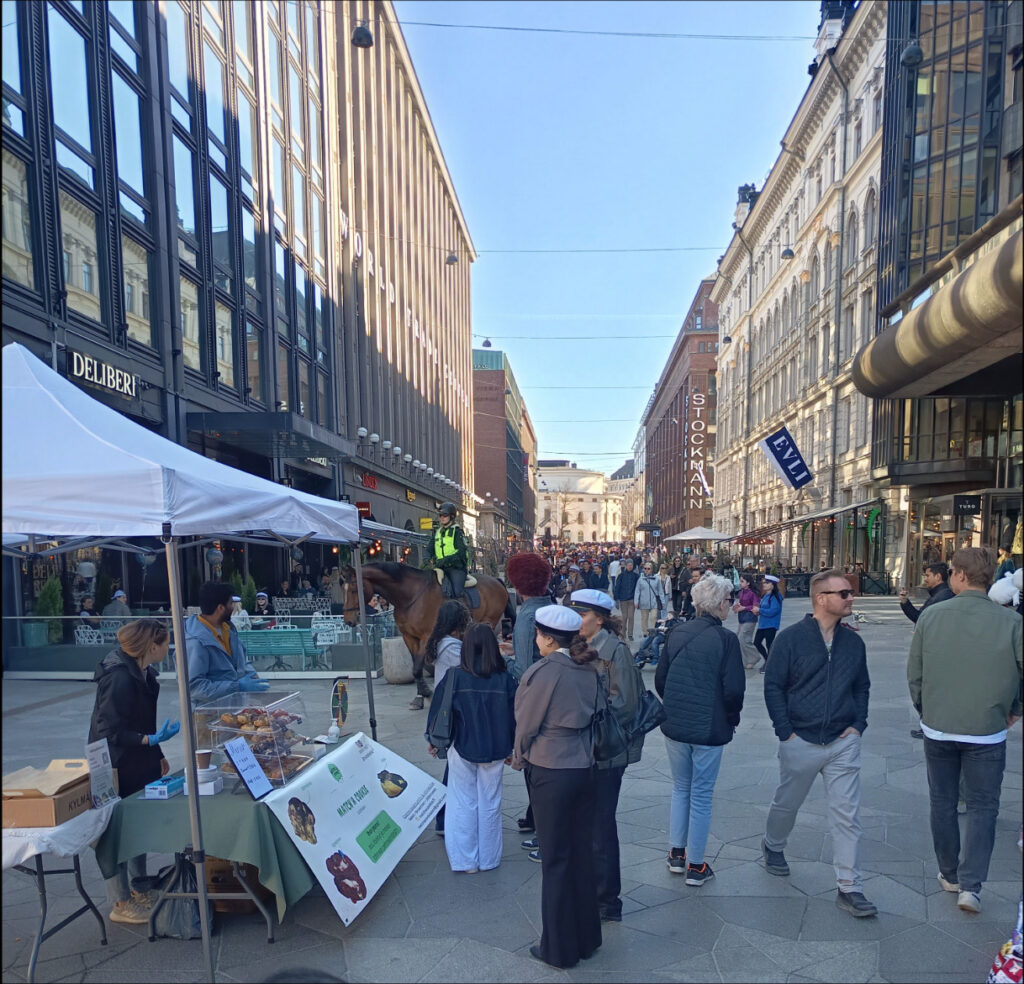
Helsinki is very different from the Baltic capitals we have visited so far. Perhaps a bit underwhelming in terms of architecture, but the festive atmosphere was fantastic—despite the prohibitive prices for drinks and we manage to have dinner at a traditional restaurant, even though it was quite difficult to find a place that was open and willing to accommodate Nuri.
We head back to Tallinn on the 10:30 PM ferry, arriving at 12:30 AM. We make our way back to the camper, absolutely exhausted.
It is now May 2nd, and after some well-deserved rest, we are ready to explore Tallinn. The day is sunny, and temperatures have finally become pleasant again.
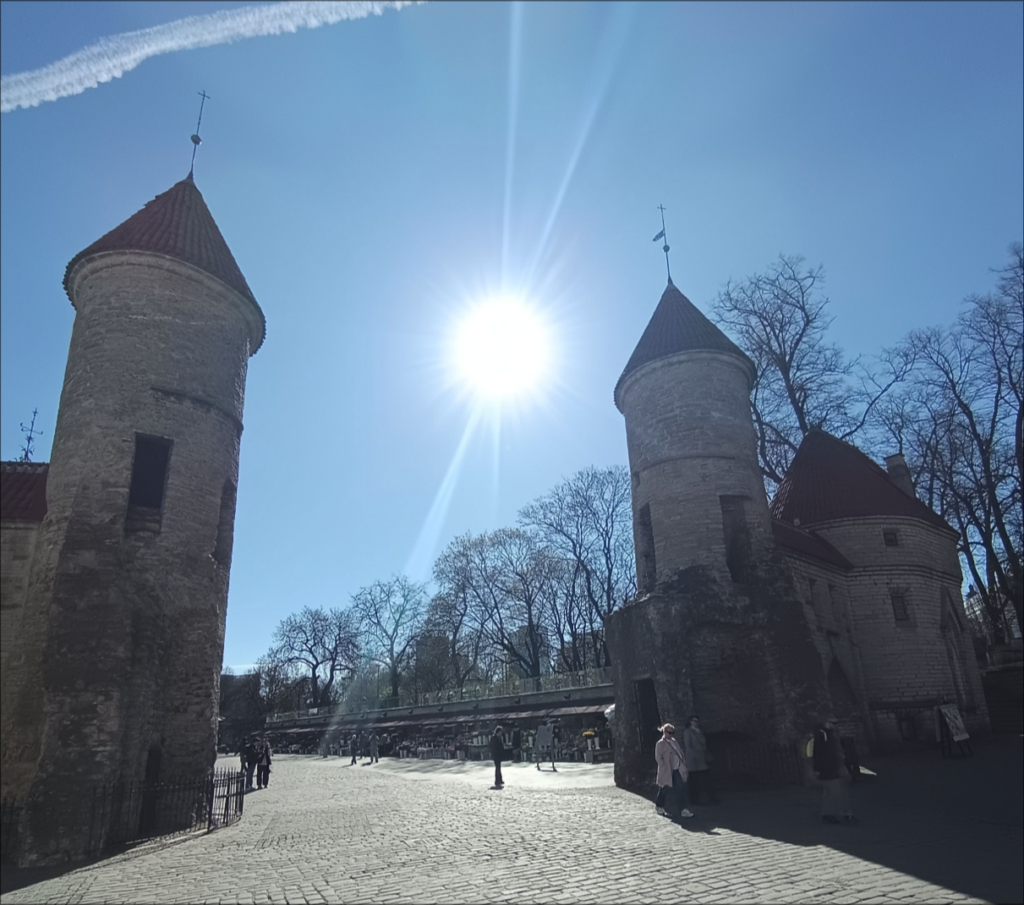
The center of Tallinn is an enchanting, perfectly preserved medieval labyrinth, where Gothic spires and fortified walls blend seamlessly with a vibrant and modern Nordic atmosphere.
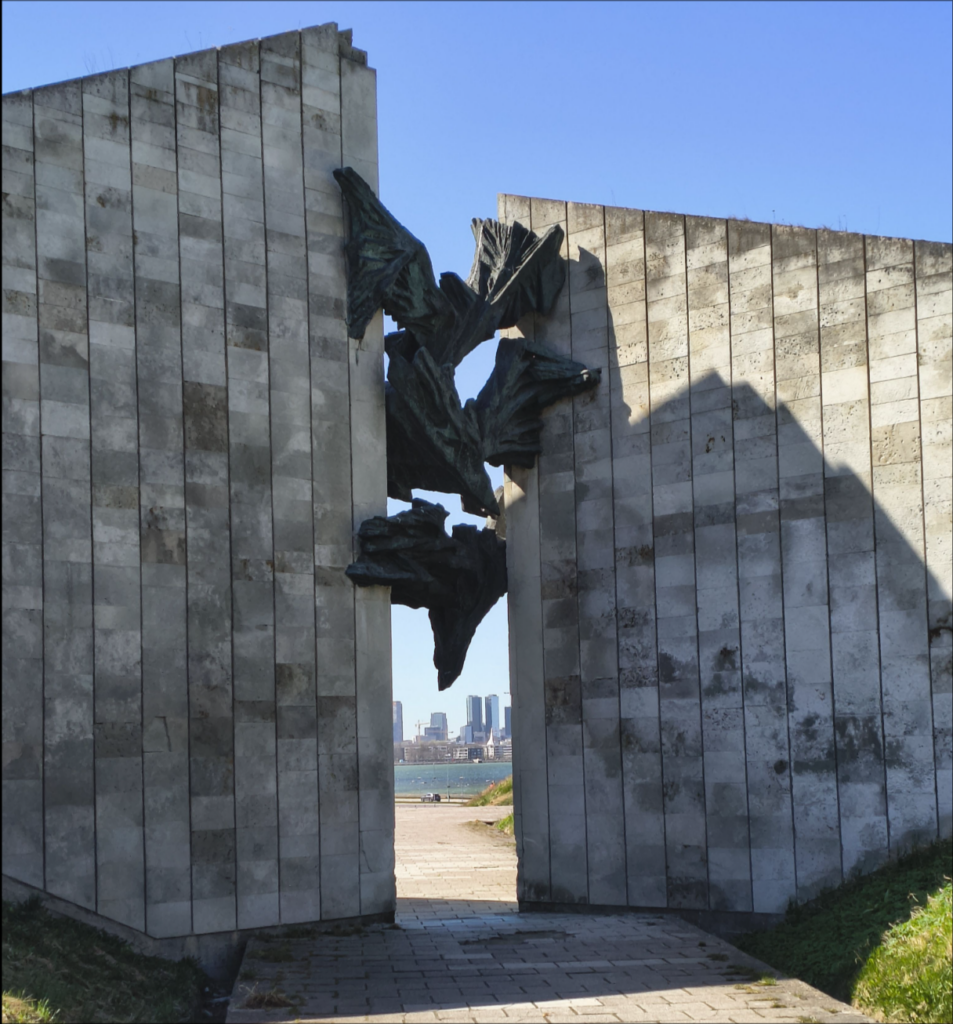
After strolling through the streets of the center, we leave Tallinn and head east, hugging the Baltic coast. We stop to visit the controversial Maarjamäe Memorial (Maarjamäe Mälestusväli), a complex that includes the Soviet memorial dedicated to those fallen in World War II, the German war cemetery, and the Memorial to the Victims of Communism in Estonia.
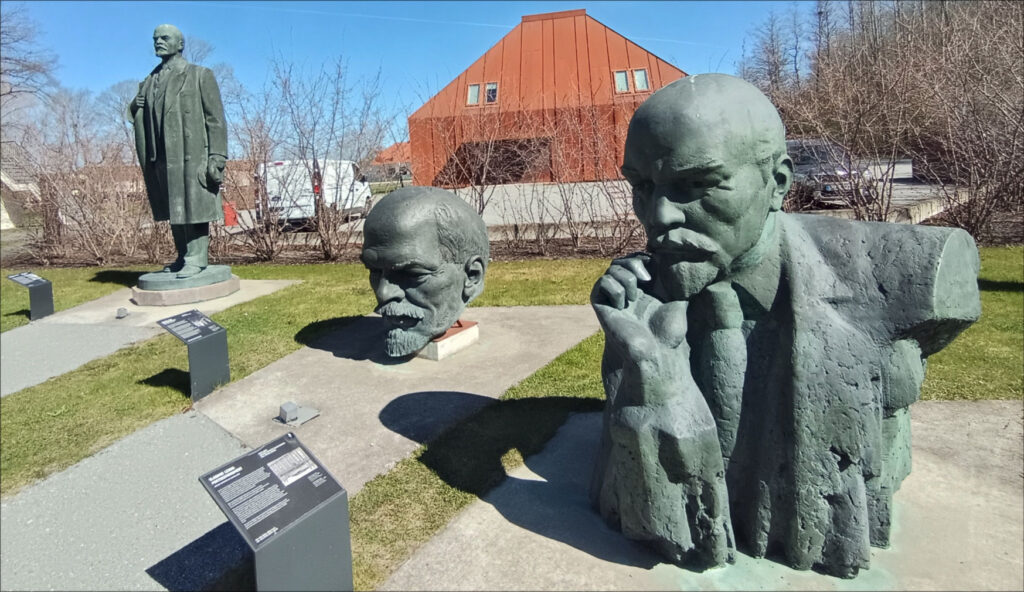
Inside Maarjamäe Palace, we also visit an exhibition of Soviet-era statues.
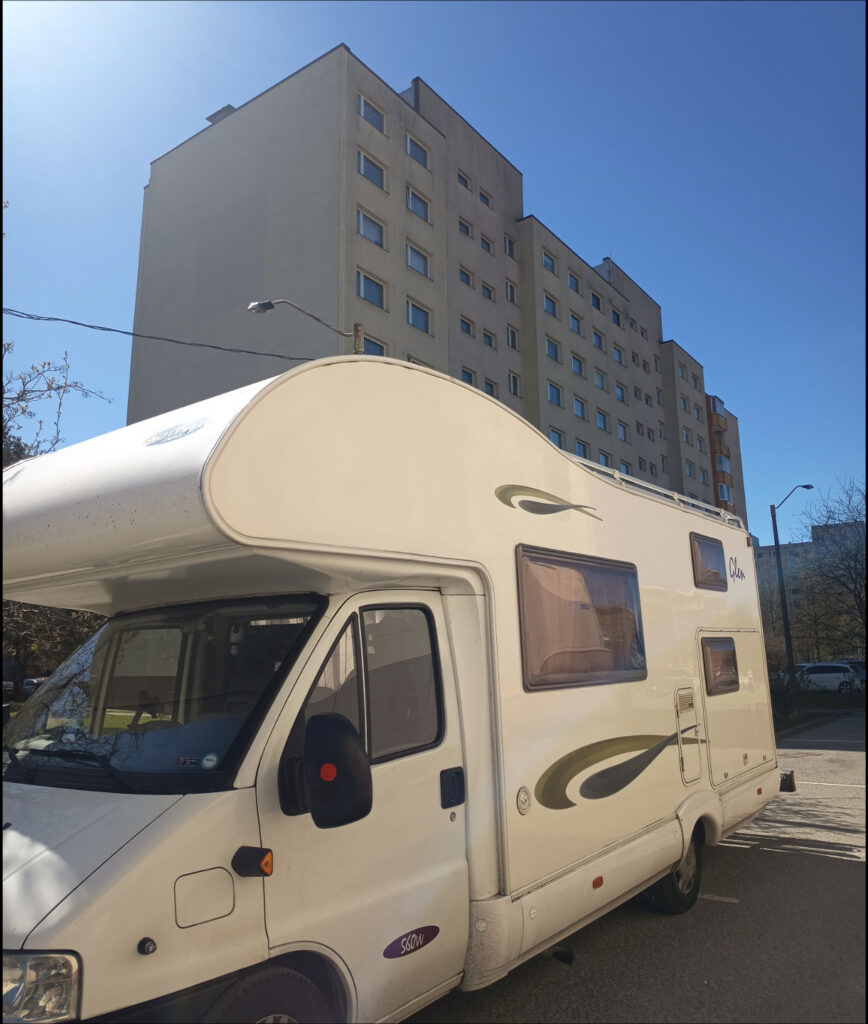
Then we look for a self-service laundry to solve our little problem. We find “Laundrix Mustakivi pesumaja” in the Lasnamäe district, tucked away among the “commie blocks.” The problem is solved efficiently and affordably. We take the opportunity to pick up some groceries at the shopping center right next to the laundry.
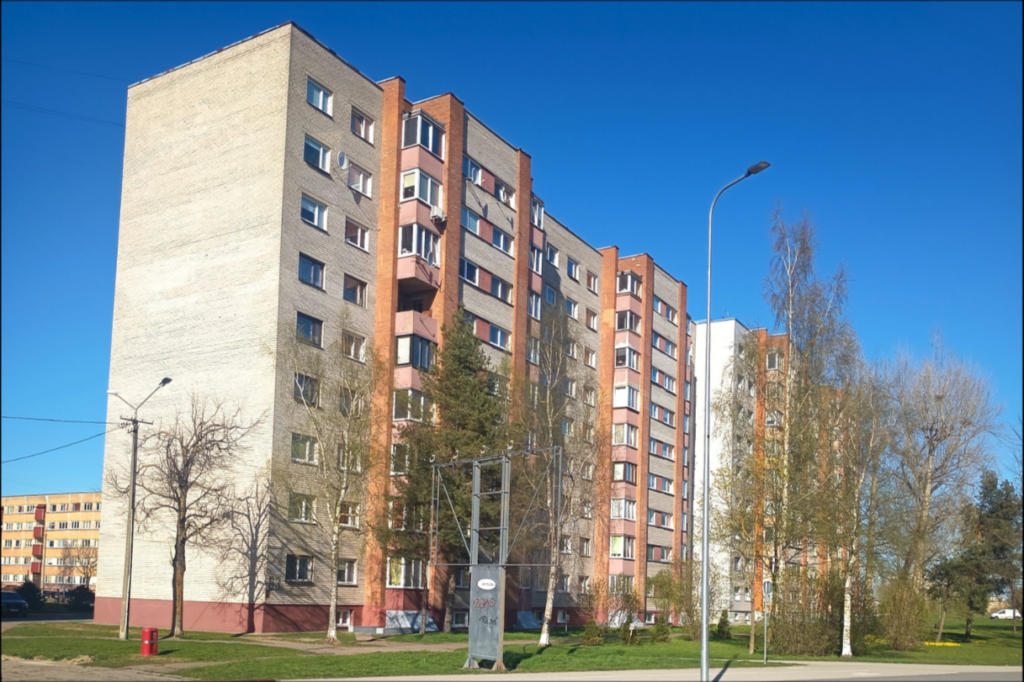
Finally We resume our journey heading east, and after about an hour, we pass through Sillamäe. For decades, it was a “closed city”—a secret location erased from official maps due to its strategic plant for enriching uranium destined for the Soviet nuclear program. Today, it is famous for its monumental Stalinist Empire style architecture.
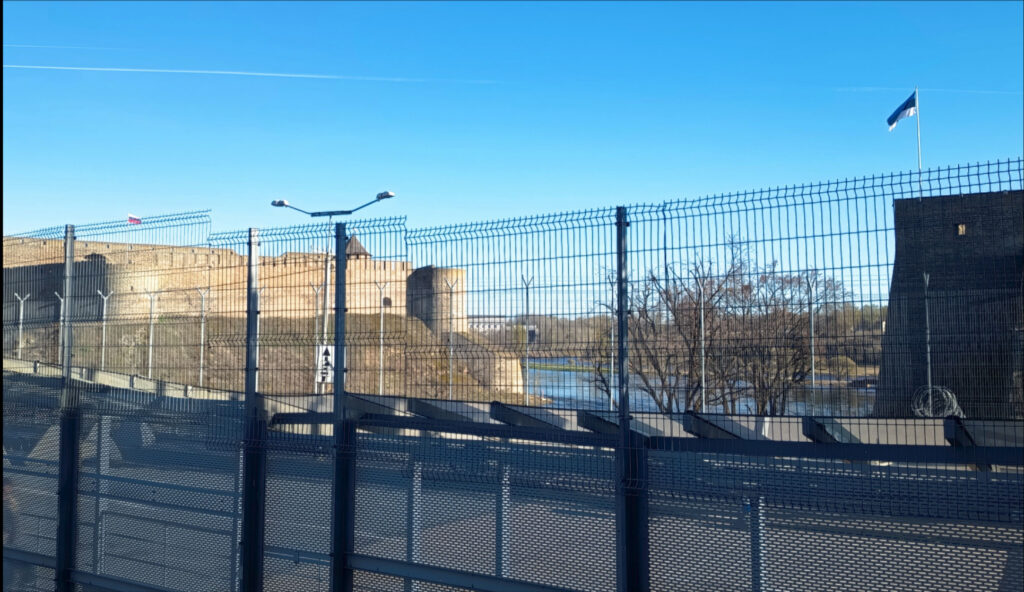
The trip continue further east until we reach Narva: a closed and fortified bridge is all that separates us from Russia!
We end the day by heading toward Vasknarva, near the Narva River—a peaceful border village characterized by the ruins of a medieval Livonian Order castle and a strong Russian rural atmosphere. We spend the night here, right next to the Orthodox Church of the Prophet Elijah (58.988884, 27.737656).
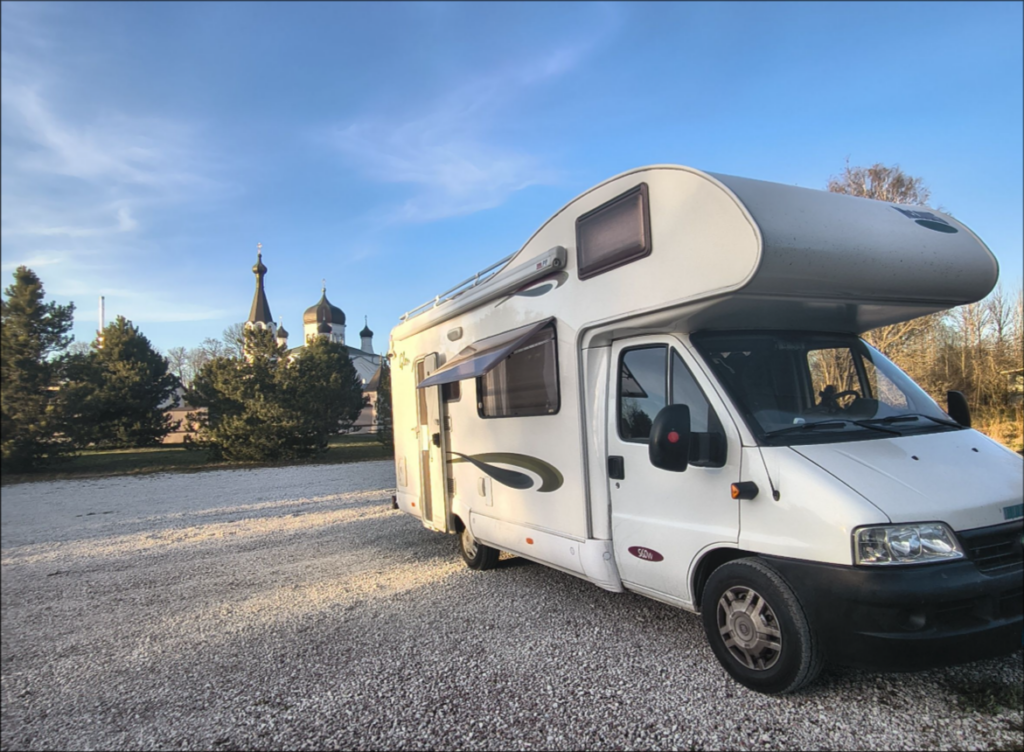
Incredibly We are right on the border with Russia—it’s just around the corner. Every now and then, the GPS even shows us as being inside Russia itself.
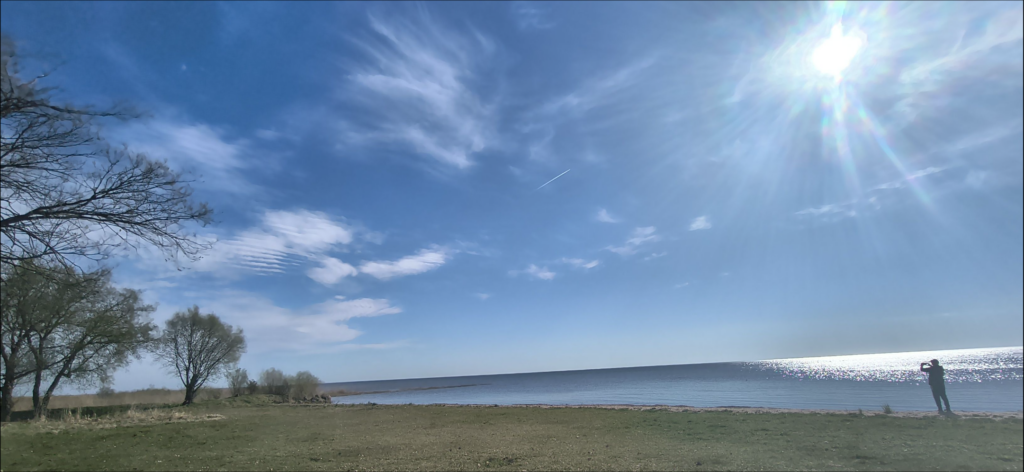
We set off early in the morning and head south, driving along the shores of Lake Peipus, which truly looks like the sea.
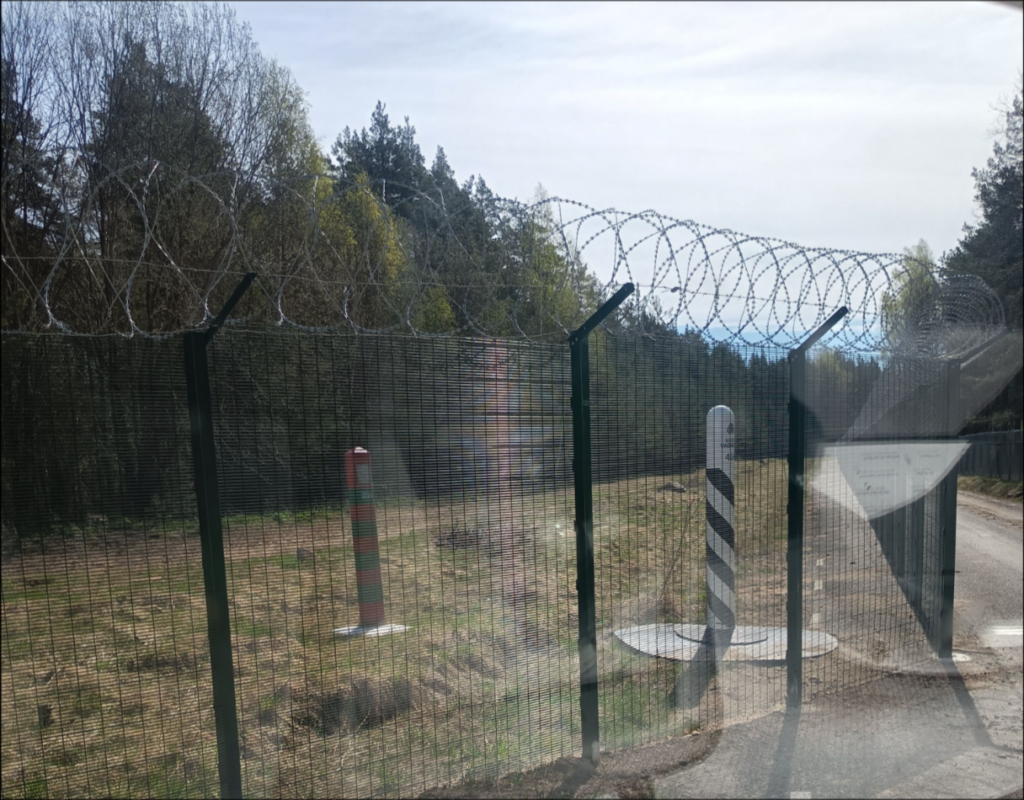
After a few hours, we reach a key destination for any true “geography nerd” on this trip, even though we knew we wouldn’t be able to fully cross it: the Saatse Boot. This is a curious Russian geographic anomaly of about one square kilometer that wedges into Estonian territory. Normally, it can only be crossed via a road where there is a strict ban on stopping, whether on foot or in a vehicle.
Currently, however, the road entering Russian territory at the “Boot” is blocked by a wall and barbed wire; there is only a dirt road that passes through the village of Lutepää before coming to a complete dead end. We pull up close, but we are forced to stop. Russia is just a few centimeters away.
Thrilled but a bit disappointed, we retrace our steps, and shortly after, we are pulled over by the Estonian border police. After a quick check, they kindly let us go.
We resume our journey and begin the route that will finally lead us back toward home. The mission “Conquering the Baltics” is almost complete.
Way back: Latvia
Lutepää in Estonia is just 120 km from our next stop: Zeltiņi. It takes us over two and a half hours to reach the small Latvian village, navigating through dirt roads and dense forests.
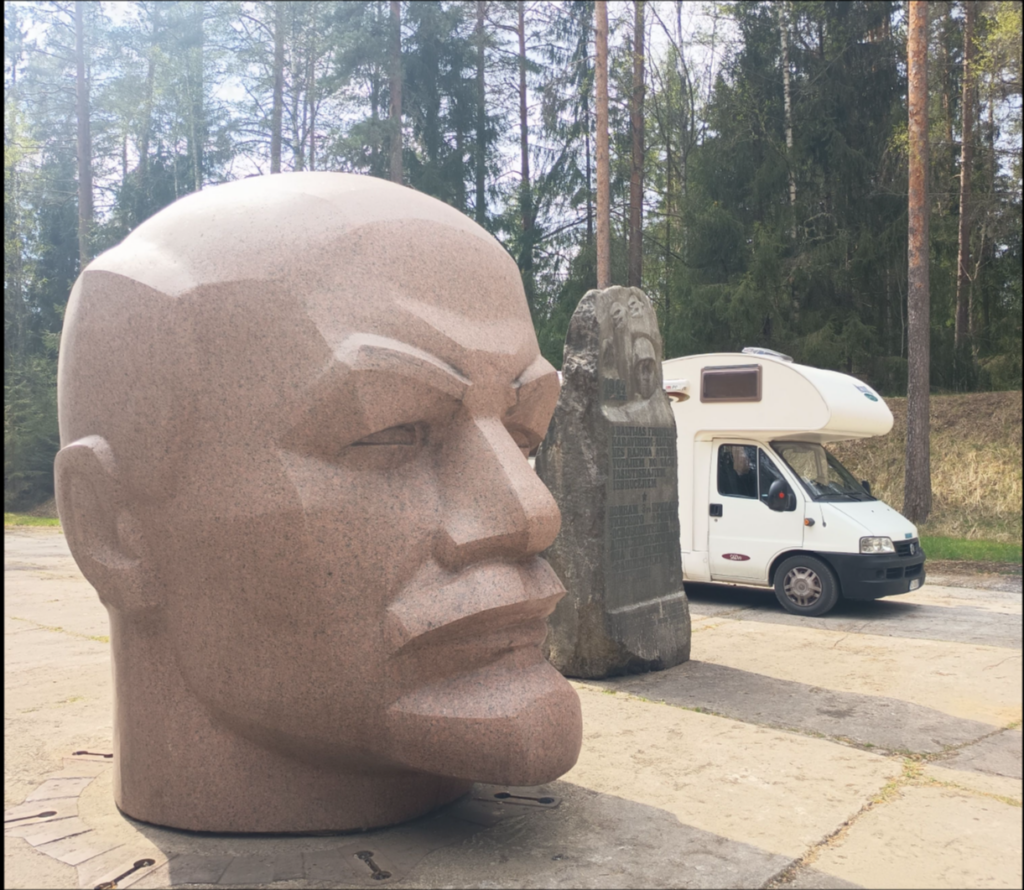
We explore the Zeltiņi nuclear missile base in true URBEX style—an eerie relic of the Cold War hidden deep in the Latvian woods. Among abandoned hangars and underground silos, a monumental stone head of Lenin still stands tall, once a key part of the site’s propaganda.
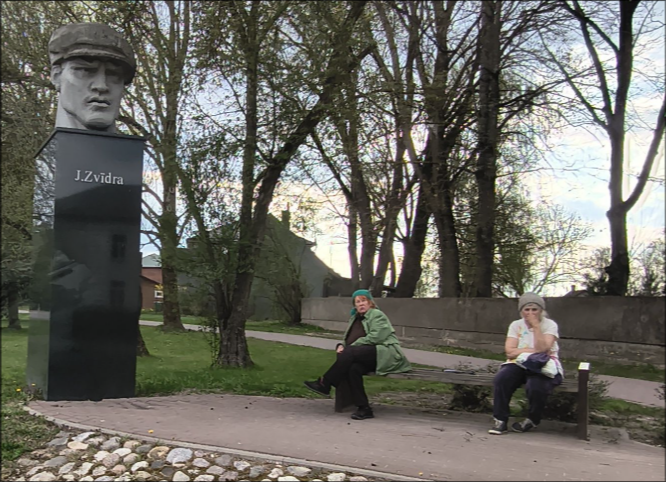
Therefore we head south through Latgale, one of the poorest regions in Latvia and Europe. In this succession of small villages, we frequently come across controversial Soviet-era monuments, such as the one dedicated to Jānis Zvīdrs near Greivuļi.
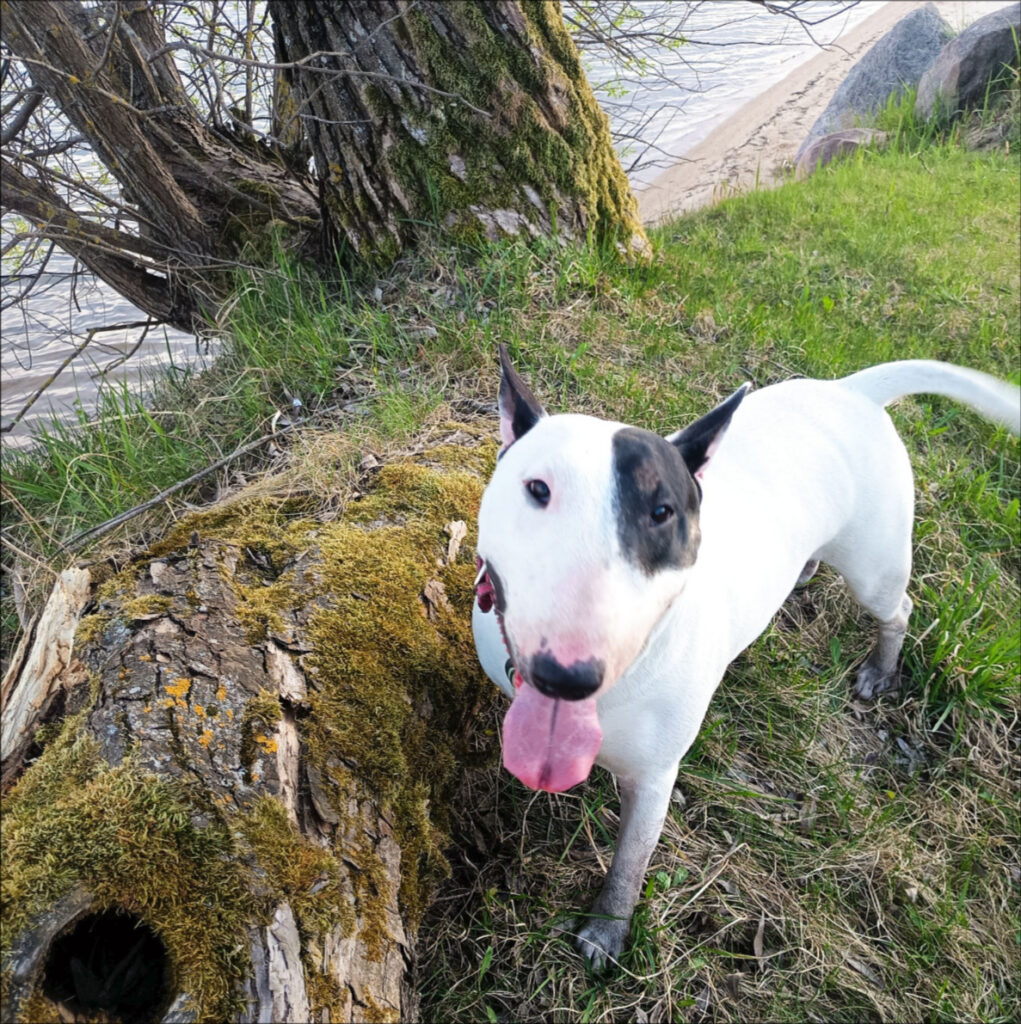
We continue on to reach Lake Rāzna near Tilīši, where we spend the night on a small beach within a sort of resort, paying €15 for the stay. Nuri is in seventh heaven.
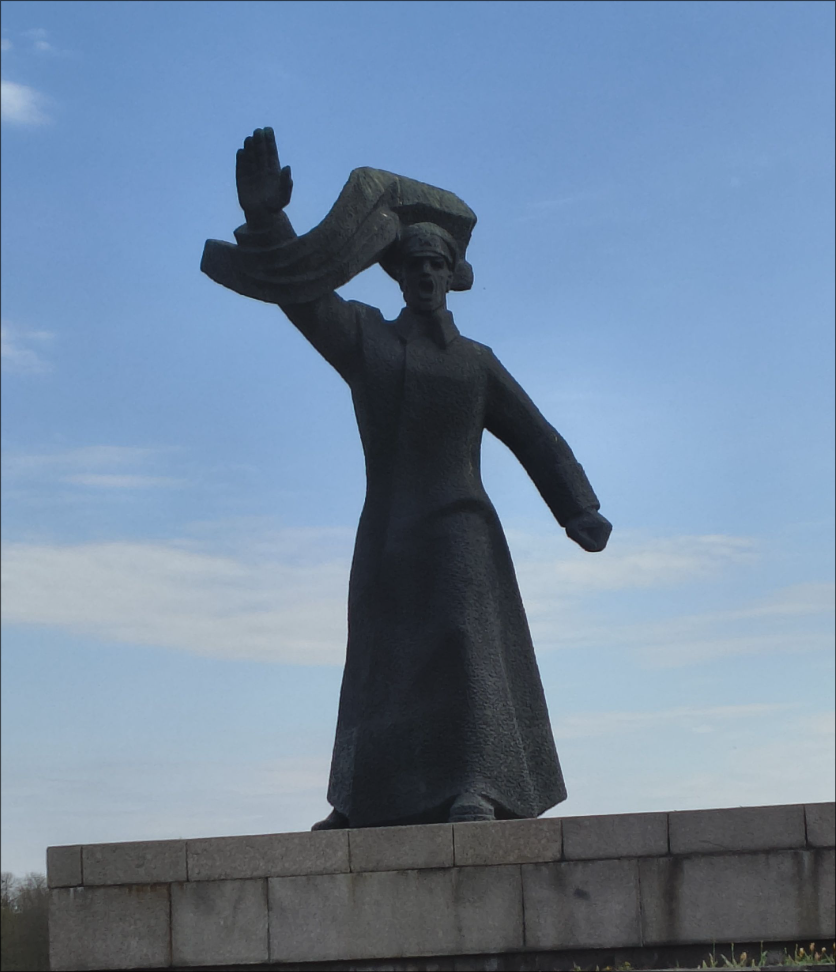
On May 4th, we leave Lake Rāzna and head south. We pass through small villages and towns where “commie blocks” dominate the landscape, creating the typical Brutalist contrast of these areas. We also encounter several Soviet-style monuments, such as the Piemineklis latviešu sarkanajiem strēlniekiem (Monument to the Latvian Riflemen) in Daugavpils.
Way back: Lithuania
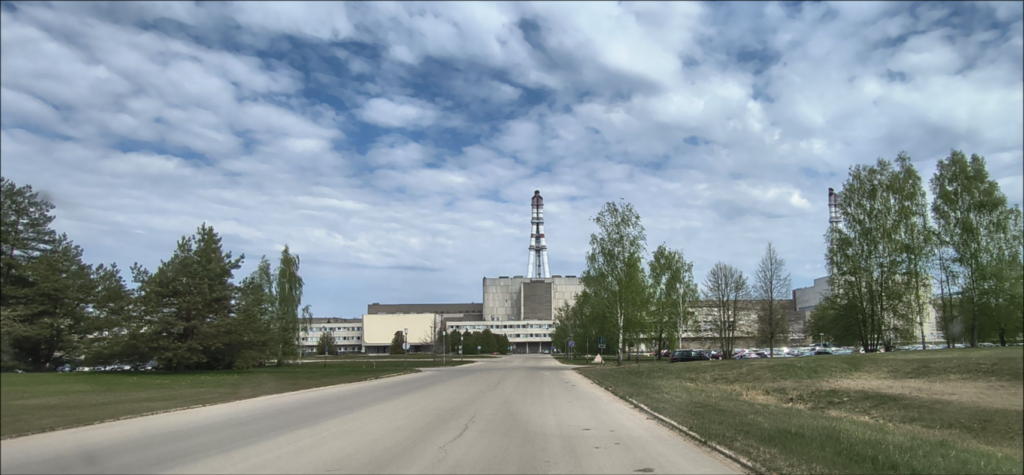
We re-enter Lithuania, where—navigating through forests and winding roads—we reach Visaginas. There, we visit the Ignalina Nuclear Power Plant, famous for serving as the “stand-in” for the Chernobyl plant in the HBO television series, as it shares the same type of technology.
After a quick lunch break in the charming village of Sariai, we continue toward Vilnius. The thermometer is reading over 25°C.
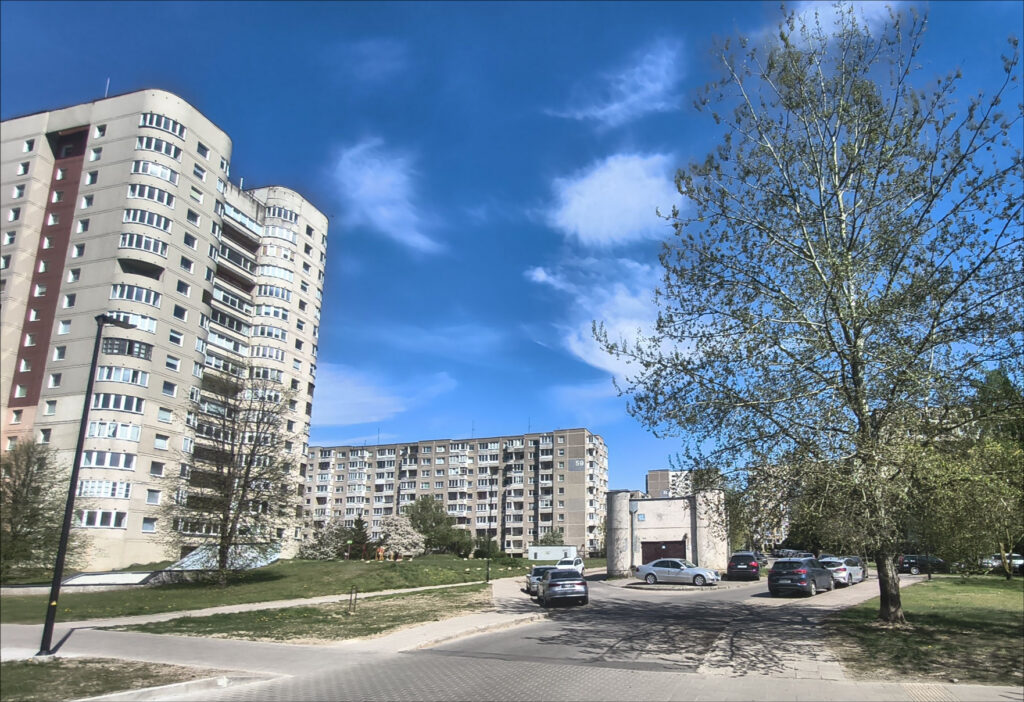
We arrive in Vilnius and immediately head to the Fabijoniškės district, also famous for appearing in the HBO series Chernobyl. Commie blocks stretch as far as the eye can see, fully immersed in a post-Soviet atmosphere.
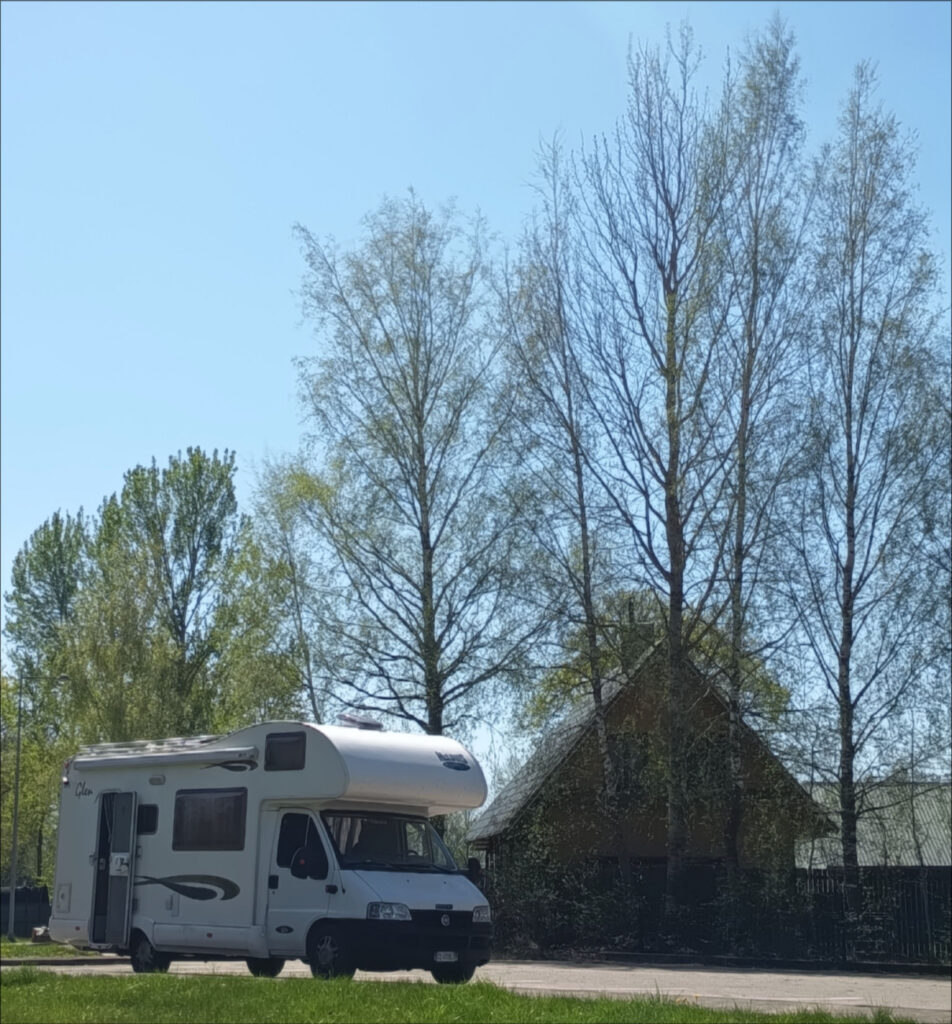
We then head toward the city center, where we park at the Downtown Forest Hostel & Camping (54.677865, 25.302228) for the night.
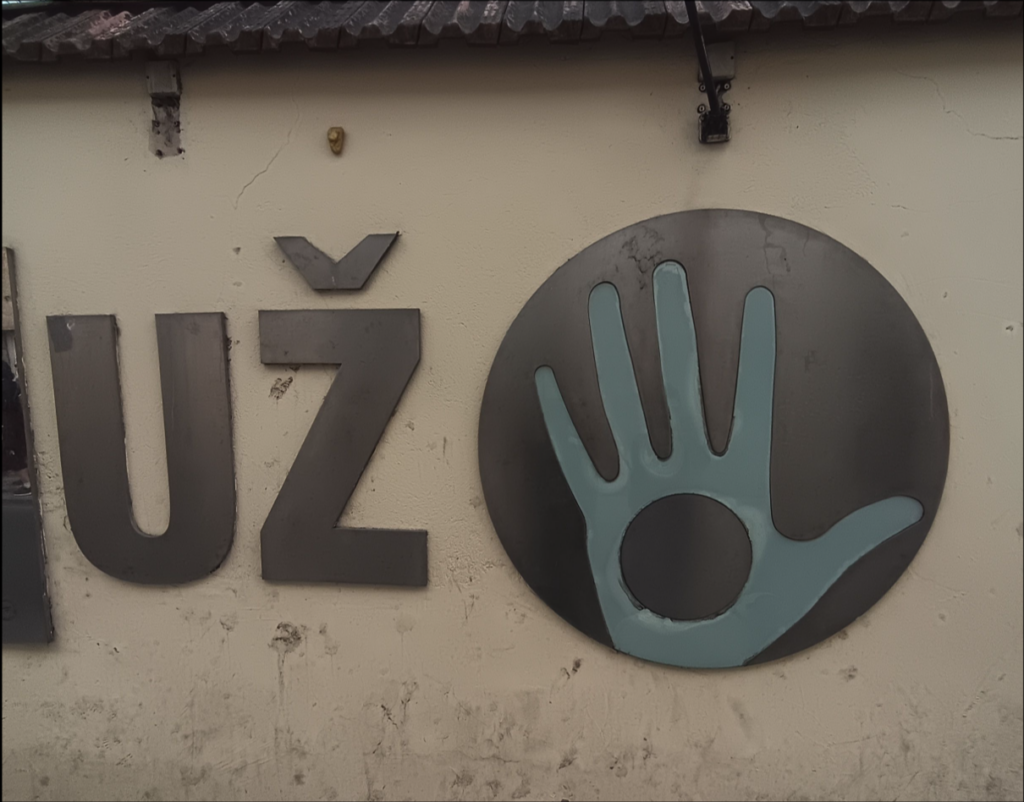
To reach the heart of the city, we walk through the Republic of Užupis—Vilnius’ bohemian and artistic district. With its ironic Constitution displayed on the walls and its symbolic declaration of independence, it represents the free, eccentric, and creative soul of the Lithuanian capital.
The center of Vilnius is a triumph of Baroque architecture—among the most extensive and evocative in Europe—where the intricate facades of churches soar above a vibrant maze of medieval alleys and hidden courtyards.
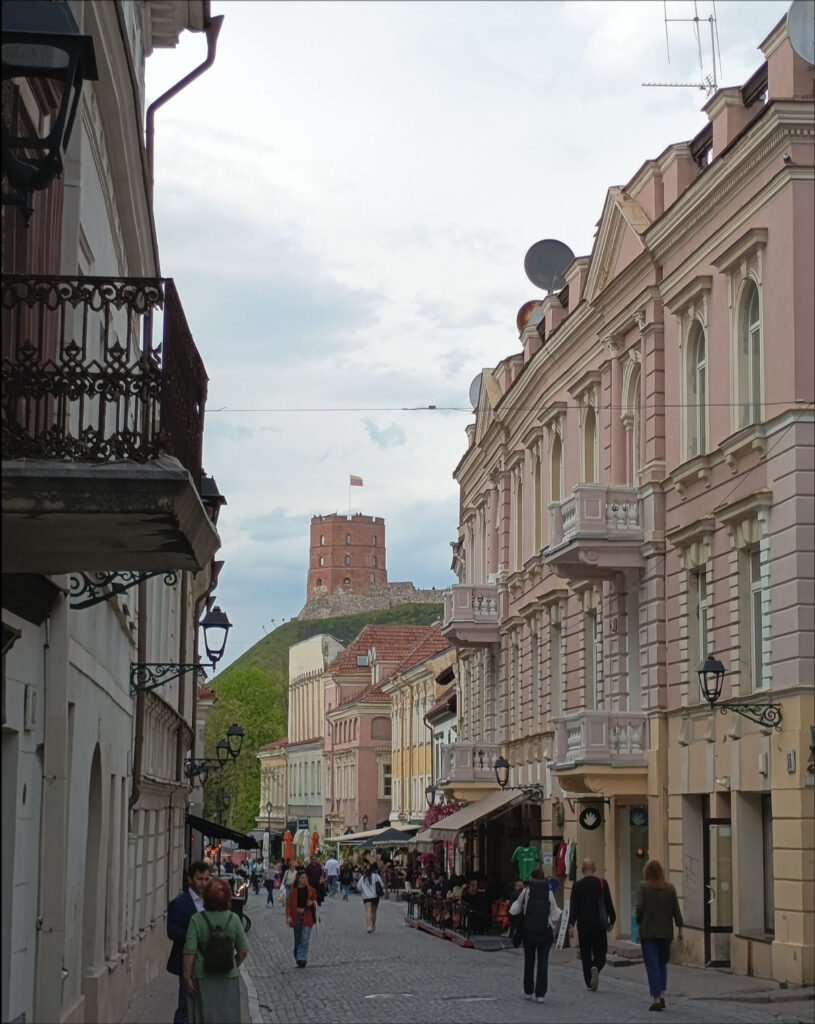
In the evening we eat at a restaurant in the city center, enjoying typical Lithuanian cuisine, before heading back to the campsite to rest. The last of the Baltic capitals has been reached!
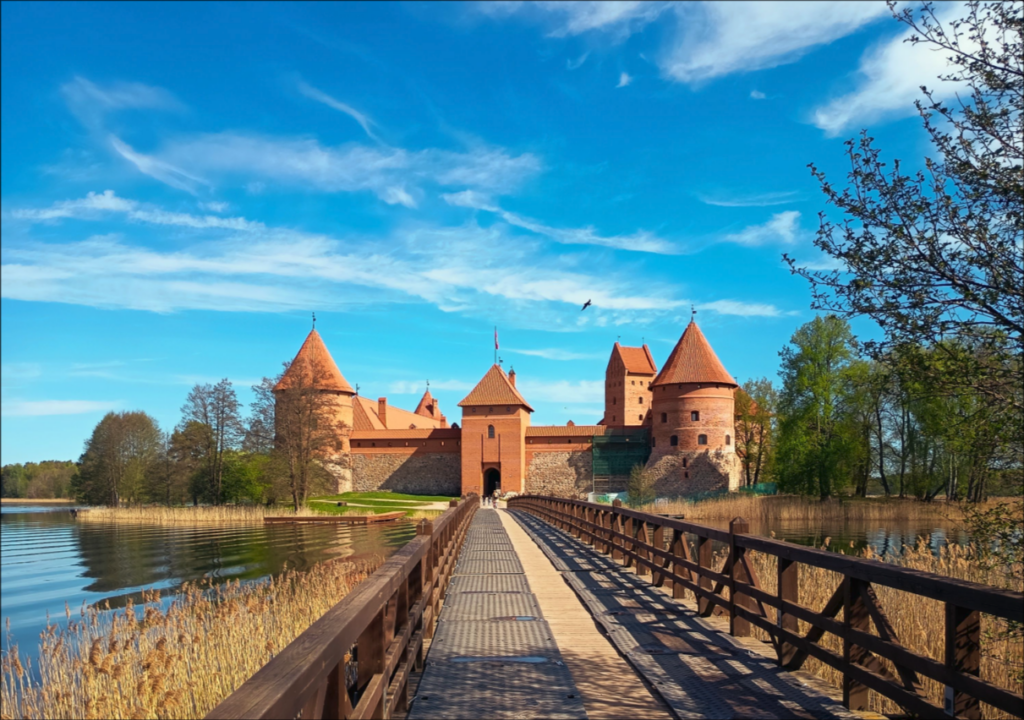
Next morning, we set off for Trakai, just a few kilometers from Vilnius. The journey is short, but we have to navigate the Lithuanian capital’s traffic. In Trakai, we visit a stunning castle on an island in Lake Galvė—a fairytale vision immersed in the nature of Lithuania.
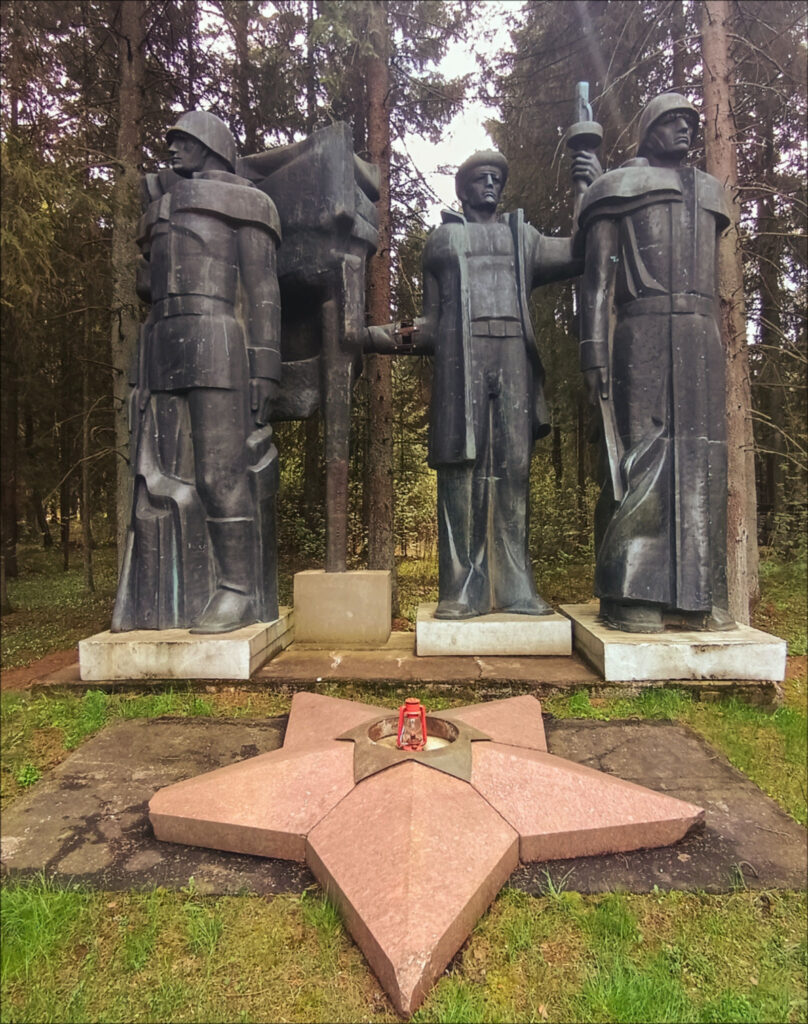
We head south to Grūtas, a small Lithuanian village that is home to Grūtas Park. It is famous and controversial for housing a vast number of Soviet-era statues collected from all over Lithuania—a counterpart to Budapest’s Memento Park, but on a considerably larger scale.
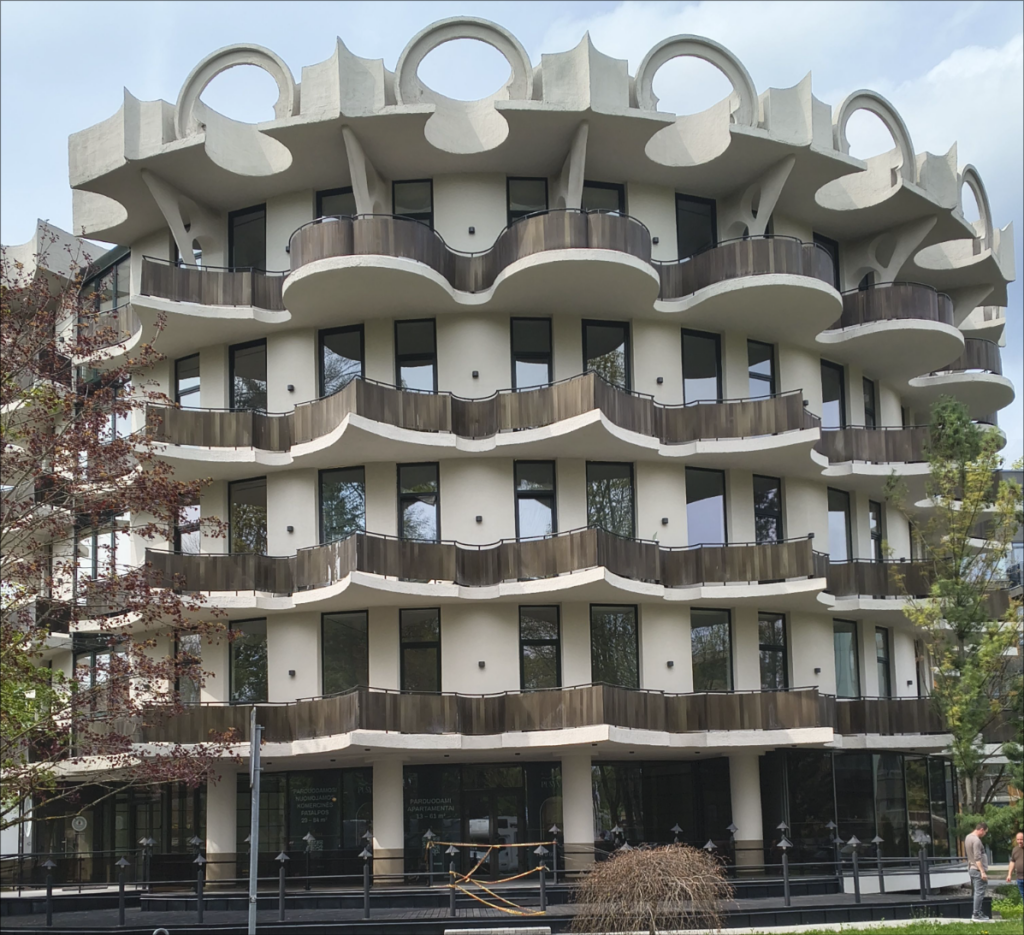
After a visit of over an hour, we do some grocery shopping in the nearby town of Druskininkai. Thanks to Atlas Obscura, we find the time to visit the Hotel Pušynas—an evocative structure and a central element of a former Soviet spa, built in a striking socialist-modernist style.
We resume our journey, continuing south and leaving Lithuania and the Baltics Republics behind us.
Way back: Poland
Once again, we cross forests and hills, occasionally venturing onto dirt roads. We cross the Polish border on one of these unpaved tracks, where we are stopped yet again by the Polish border police. In the evening, we reach Augustów and park near Lake Białe Augustowskie to spend the night (53.858593, 23.012856). We are in an isolated, silent clearing, deep within the woods. Nuri runs around happily, even with a bit of rain falling late in the evening.
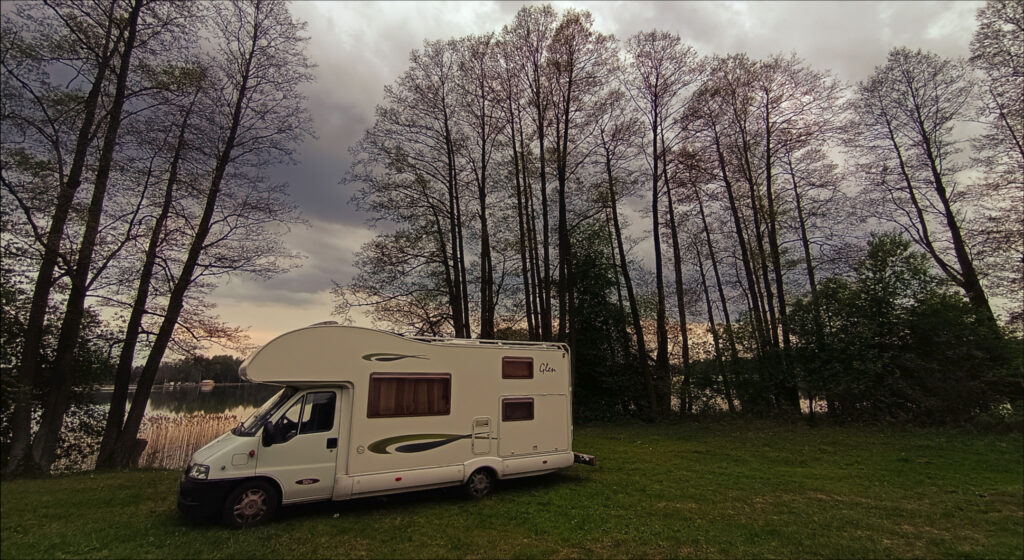
We set off early, as a long journey awaits us—about 600km across the length of Poland. The return home is drawing near, but there are still a few destinations to reach.
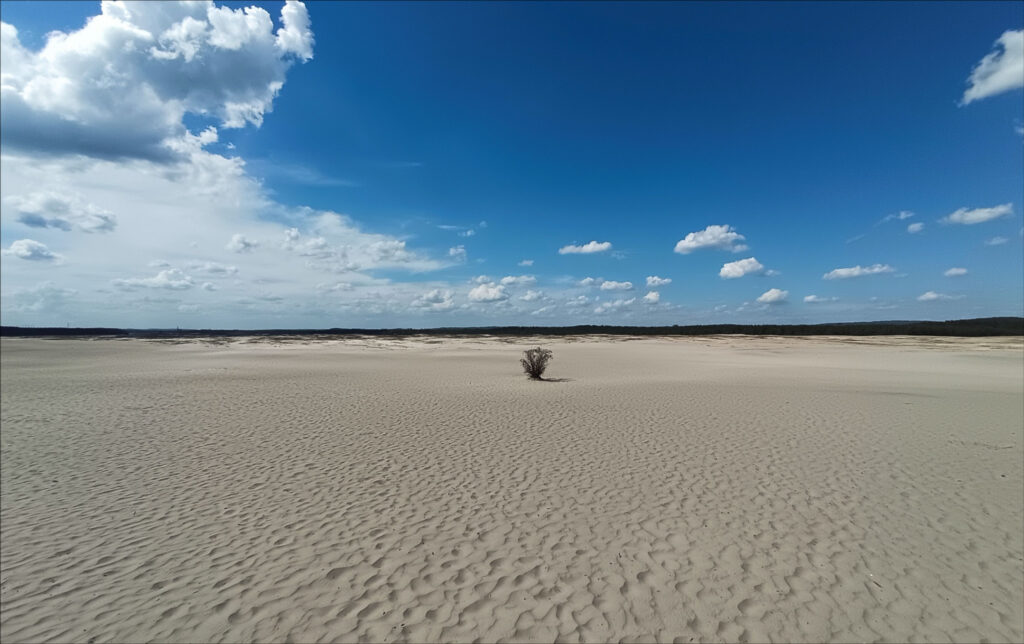
After navigating Warsaw and its chaotic traffic, it takes a few more hours before we arrive at a fantastic geographical anomaly: the Błędów Desert. This unique landscape stretches for 33 square kilometers across the vast expanse between Dąbrowa Górnicza and Klucze in southern Poland.
Later we continue for another hour toward our final Polish destination, the most emotionally intense one: Oświęcim. We arrive around 4:30 PM and, by pure chance, decide to visit the Auschwitz II – Birkenau camp first.
The impact is profound: thinking that just over 80 years ago, such a vast area was a place of imprisonment and death for so many people is heartbreaking. The silence is surreal.
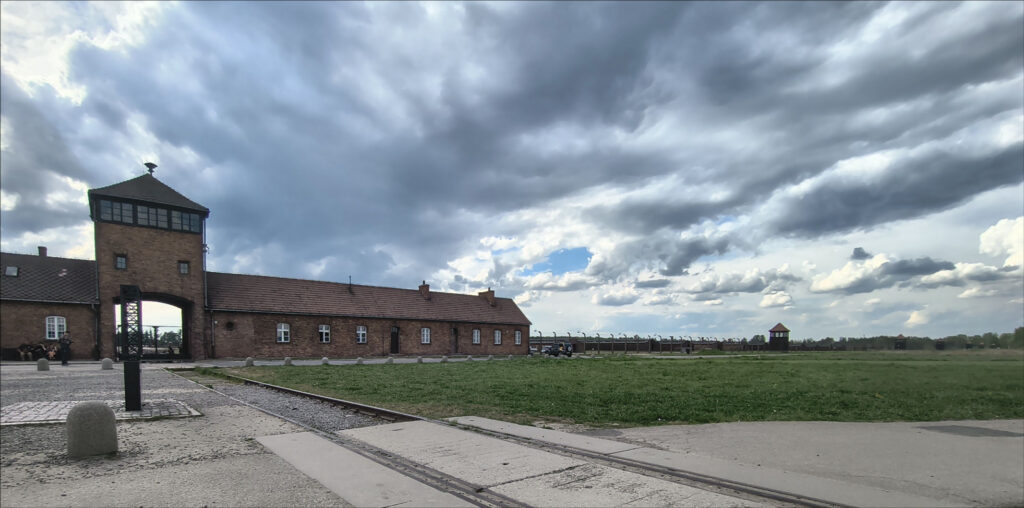
Aushwitz online booking system worked well, though the museum staff is very rigid. They let us in at 5:00 PM sharp, assuring us that Auschwitz I would close at 7:30 PM. We arrived at the main museum area in the town of Oświęcim at 6:00 PM, only to discover to our regret that it was closing exactly at that hour, preventing us from visiting the main camp. Perhaps with a bit of controversy, once again, the Poles did not prove to be as kind and understanding as one would expect in such a place.
Next day, we didn’t give up and went back to Auschwitz I, trying to explain the situation. This time, the staff understood, but self-guided visits are only allowed from 5:00 PM onwards. In the morning, the museum can only be visited with a guide. Shocked to discover that the price was over €80 for two people we gave up. We were struck by how such an important site can be managed like a mere attraction. A real shame.
A lake in Goje is out night spot for today, not far from Oświęcim (50.123196, 19.218610).
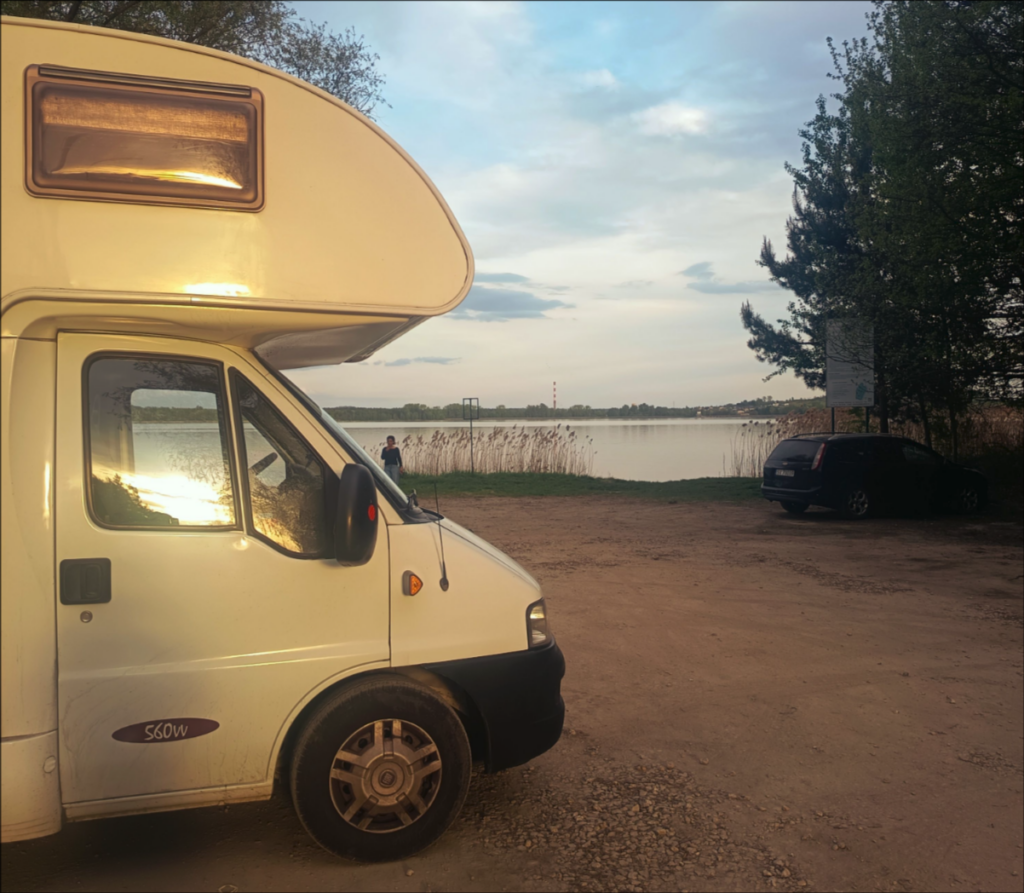
We set off in the morning, but with a change of plans. We were supposed to head back into the Czech Republic to visit the famous Church of Spirits (Kostel sv. Jiří), then drive toward Regensburg in Germany before heading down into Italy to rest by Lake Braies before catching the ferry in Livorno. However, evaluating the kilometers already covered and the travel times, we decide to change course. We are heading south once more!
Way back: Slovakia
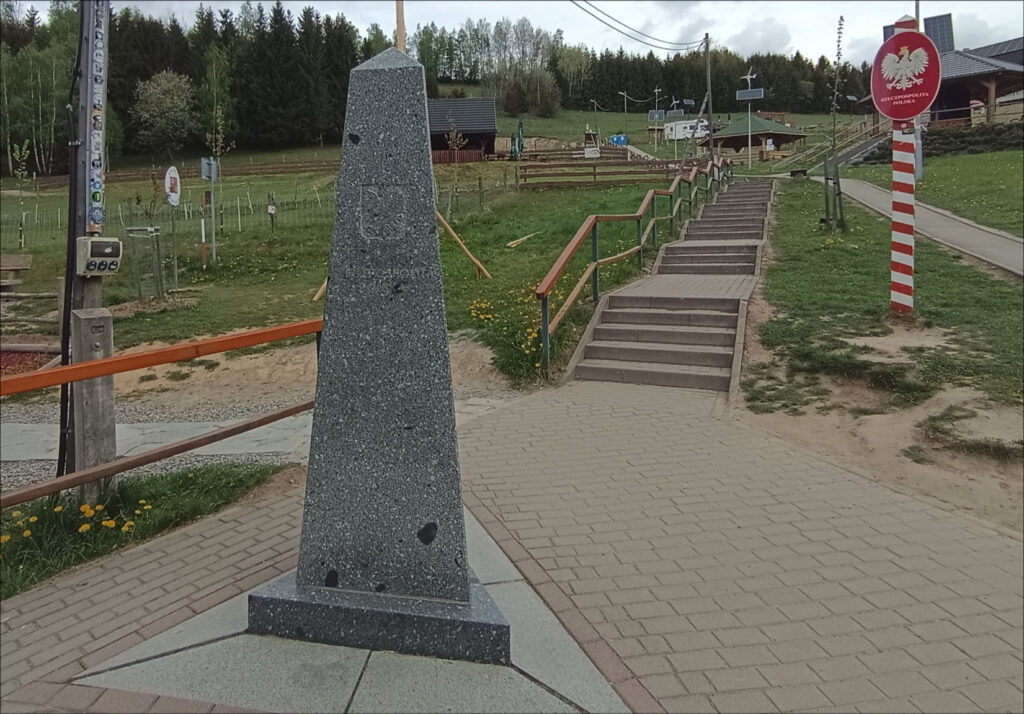
Passing through Silesia, we arrive in Slovakia after finding ourselves at a unique spot: the SK/CZ/PL Triborder (Trójstyk granic Polski-Czech-Słowacji). We had hoped to see a triple border in the Baltics as well, but we decided against it due to the difficult geopolitical situation. We “settled,” so to speak, for this EU tripoint, and it was a wonderful experience. At certain points, we drove along the Poland–Czech Republic border with Glen literally split in half lengthwise.
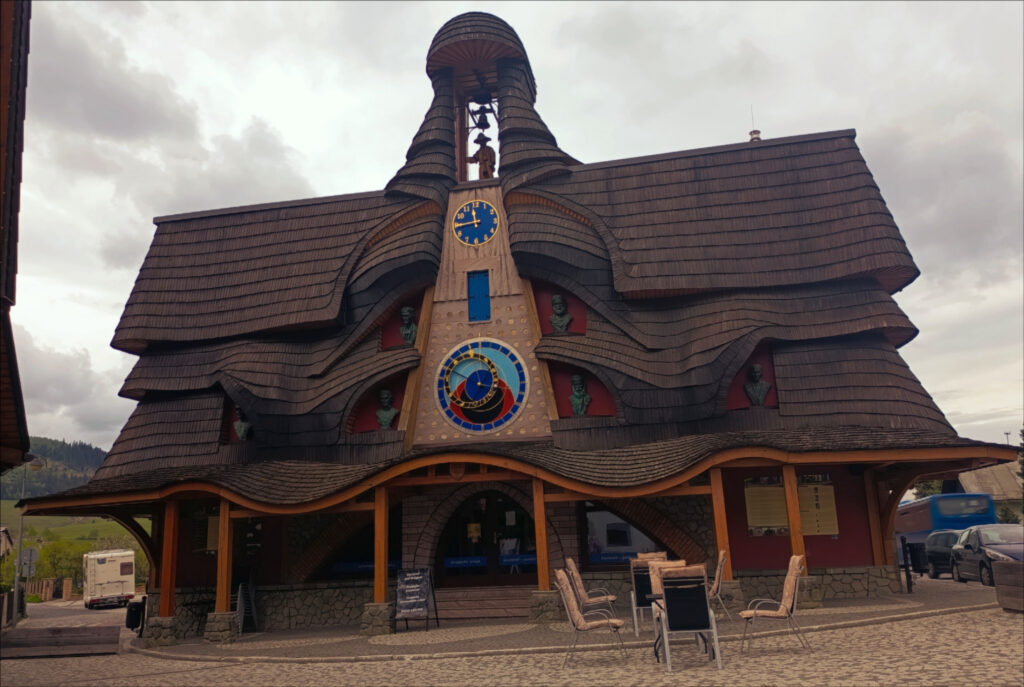
We continue on and visit the small village of Stará Bystrica, where we find the world’s newest and most accurate astronomical clock.
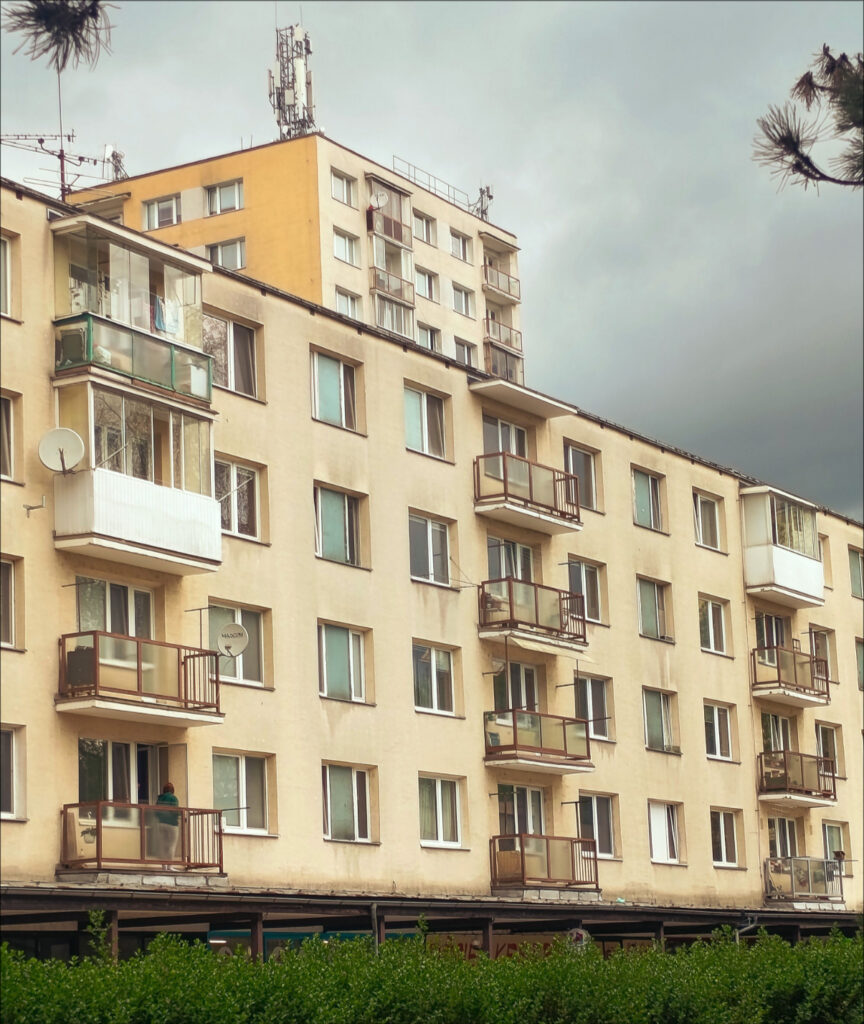
We stop for lunch in the Martin Sever district of Martin—a perfect example of socialist urban planning, where the “paneláky” (the typical high-rise blocks) dominate the landscape with their rigorous and monumental geometry. Here, we drank Kofola, the Czechoslovak response to Coca-Cola and Pepsi, created in the 1960s as an “autarkic” alternative during the communist regime.
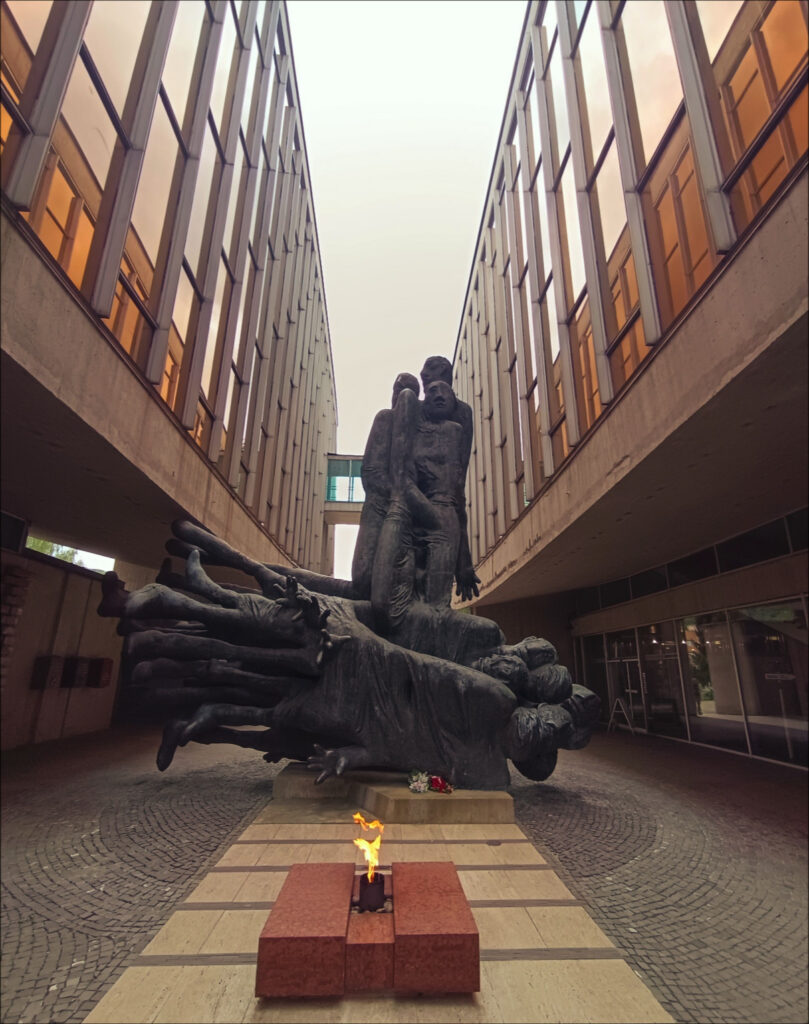
Traveling along high mountain roads and navigating an endless series of hairpin bends, we reach Banská Bystrica. We immediately visit the Museum of the Slovak National Uprising (Múzeum Slovenského národného povstania)—an imposing masterpiece of Brutalist architecture. It consists of two distinct concrete structures that part to house a commemorative area dedicated to the resistance against Nazism during World War II.
We then stop in Nitra for the night and park at Hidepark to spend a quiet night surrounded by greenery (48.315403, 18.067383).
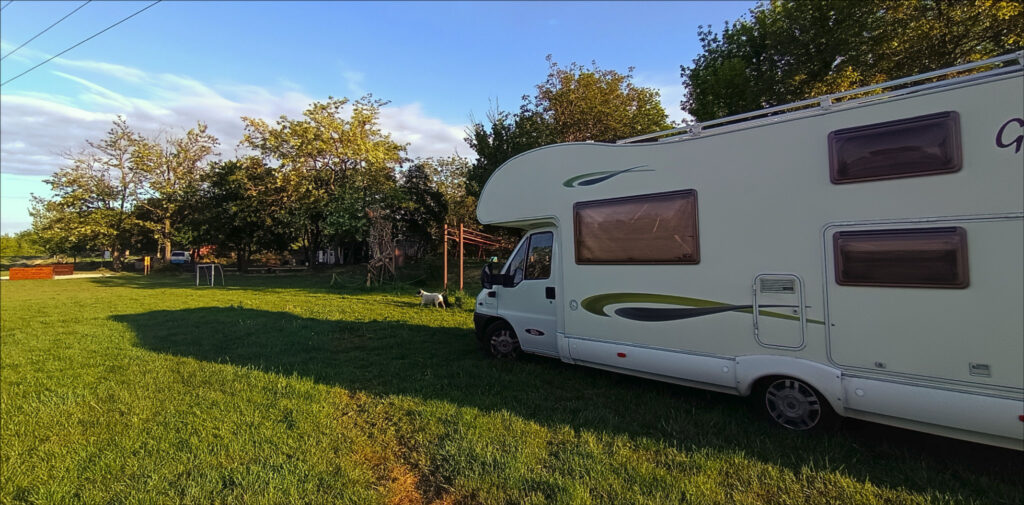
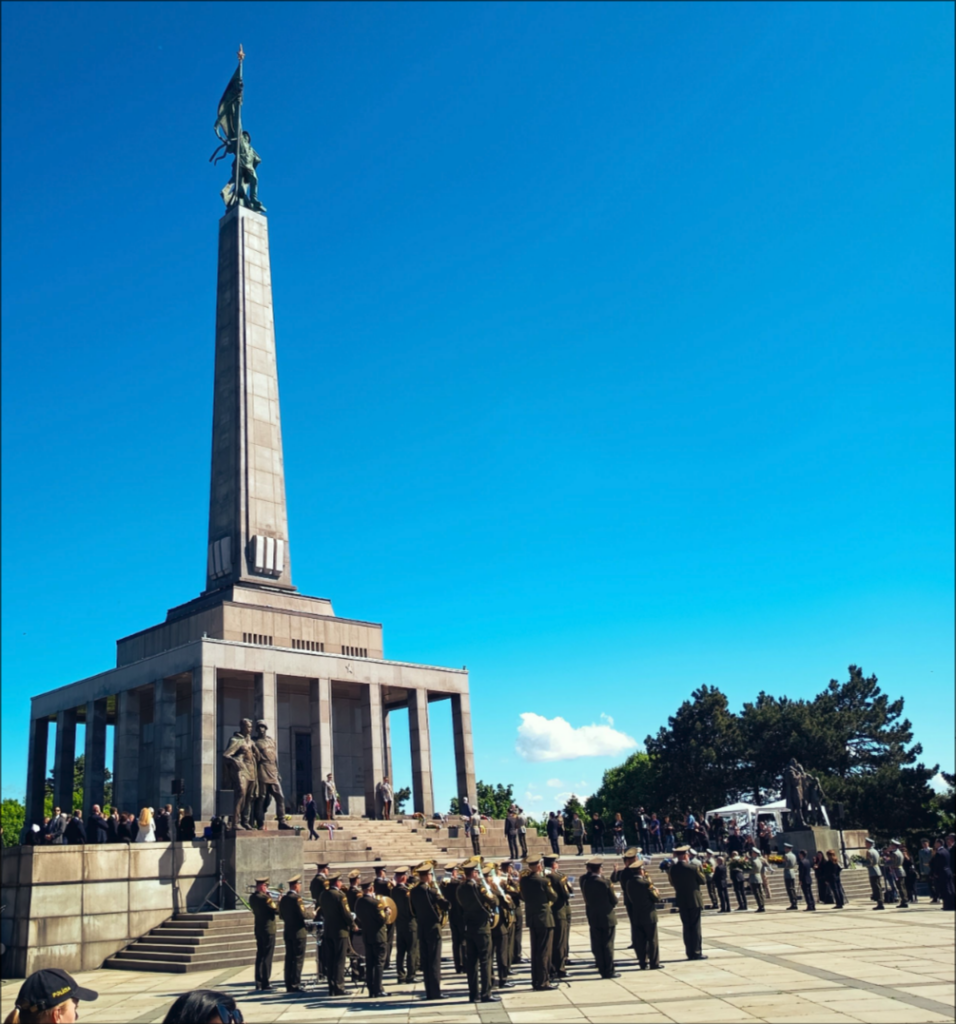
The following day, before heading toward Italy via Austria, we stop in Bratislava. We take a quick tour of the UFO Bridge (Vyhliadková veža UFO), the Brutalist Slovak Radio Building, and the Slavín Memorial. Our visit to the memorial happens to fall on May 8th, the national holiday celebrating Victory over Fascism Day (Deň víťazstva nad fašizmom).
Way back: Italy
After driving across all of Austria and doing some grocery shopping near Vienna, we arrive in Italy in the evening. Just past the border, we stop in the Tarvisio area, surrounded by the stunning setting of the Laghi di Fusine.
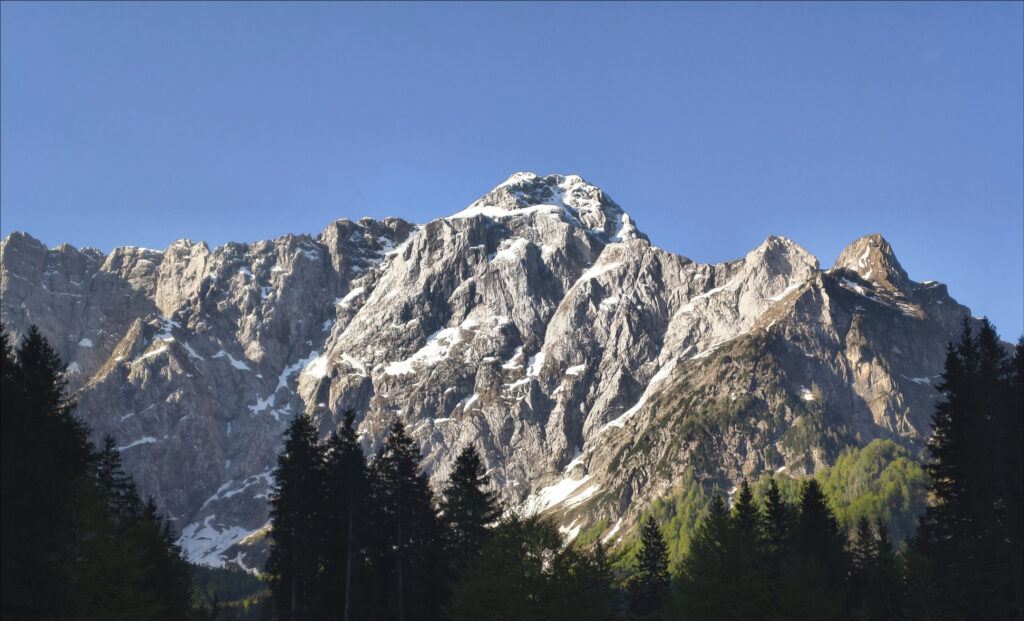
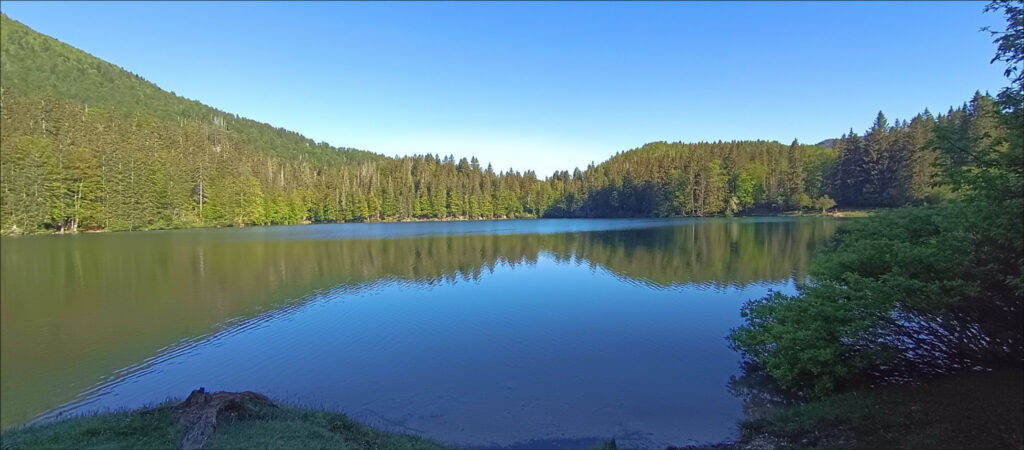
On May 9th, we set off again for Livorno. We stop in Rovigo to do some shopping at a mall and decide to make a detour to Tresigallo, the “Metaphysical City,” which turns out to be a total disappointment.
Once we reach Livorno, we board in a rush; the ferry is packed with German, Austrian, and Swiss tourists. Campers and motorbikes are all ready to explore Sardinia. As for us, we are returning home with countless memories.
Conquering the Baltics: Conclusions
Conquering the Baltics: An incredible journey of over 7,000km by road and nearly 1,000km by sea, visiting 9 nations and reaching Europe’s borders with Russia. Technically, the Gas-Free conversion worked brilliantly in this first major test. The solar panels, synced with the Victron Orion XS, consistently guaranteed battery charging even in adverse weather conditions. The maximum discharge recorded was approximately -140Ah. Cruise control proved to be an essential feature for the trip. The internet connection via Nomad eSIM was flawless, and the 50GB plan was sufficient.
Nuri did wonderfully; the mix of long city walks and nature stops was fantastic for her. Furthermore, all the countries visited, with the exception of Finland, surprisingly turned out to be 100% dog-friendly. Nuri sends her thanks as always! Unfortunately, due to the global geopolitical situation, fuel costs were higher than expected, accounting for over 50% of the total budget. Our most expensive refuel was in Austria at about €2.2/L, while the most affordable country proved to be Poland at around €1.65/L.
Generally, all the countries we visited were reasonably priced, but certainly not as cheap as one might have imagined years ago. All nations have aligned, more or less, with European prices, with the sole exception of Finland, which was truly expensive. Of course, over 7,000km in 15 days was an ambitious goal, and exhaustion definitely set in at times. But if you want to reach distant destinations in a short period, you have to take some risks. The risk and the effort were well rewarded by stunning places—from nature and art to geographical oddities and a good dose of post-Soviet Brutalism.
Danke, Děkuju, Dziękuję, Ačiū, Paldies, Aitäh, Kiitos, Ďakujem, Grazie.
Gratzias, until the next adventure.
Leave a Reply